We’ve all had that morning. You stand in front of a full wardrobe and somehow nothing feels right. The sleeves are too boxy, the skirt hits at exactly the wrong spot, and you end up cycling back to the same three things you always wear. It’s not a lack of options — it’s a lack of the right silhouette.
Here’s something fashion stylists have known for decades: the shape of a garment matters just as much as its colour or fabric. And few shapes do as much quiet, reliable work as the wrap silhouette.
Whether it’s a classic wrap dress that cinches the waist and flows gracefully over the hips, or a modern wrap-style top paired with tailored trousers, these designs have an almost universal flattering quality. They adapt. They adjust. They meet your body where it is rather than demanding your body conform to some rigid cut.
In this guide, we’re going to break down exactly why wrap silhouette fashion works so well, how it plays on different body shapes, and the practical styling moves that make it look even better. No vague tips — just real, useful insight.
What Exactly Is a Wrap Silhouette?
Table of Contents
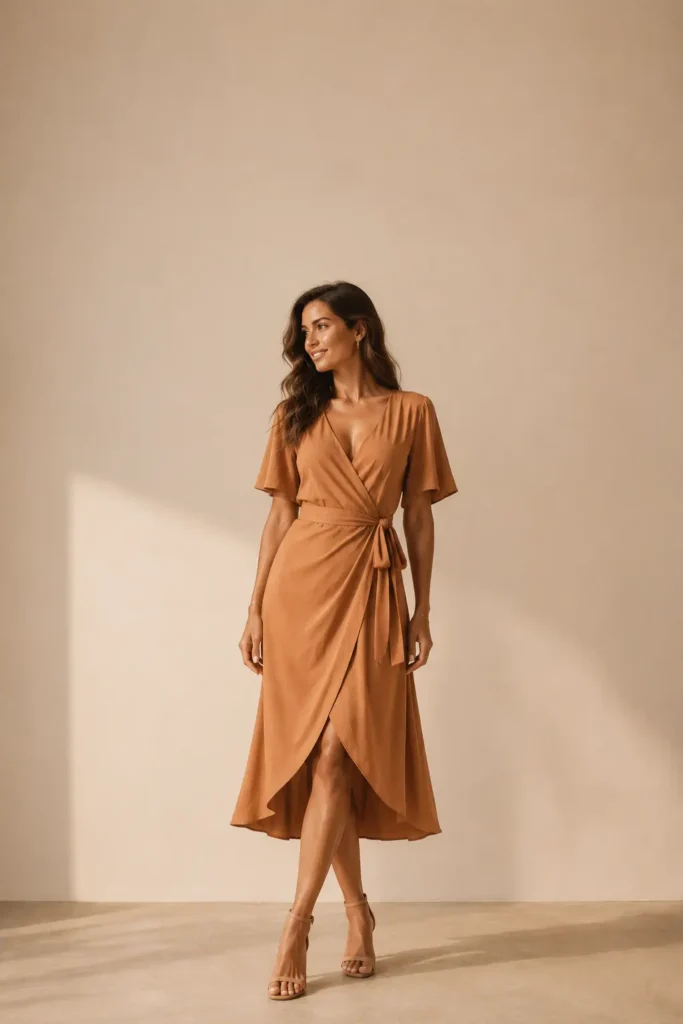
At its core, a wrap silhouette is defined by fabric that crosses over the front of the body and ties — or appears to tie — at the waist. The result is a V-shaped neckline, a defined midsection, and a skirt or lower half that falls away naturally.
The most iconic version is the wrap dress, which Diana von Fürstenberg famously popularised in the 1970s. Her original design was practical, confident, and deeply wearable — traits that have kept the style alive for over fifty years. But the silhouette has evolved far beyond that single style.
Wrap Style Variations to Know
- True wrap dress: Fabric ties at the waist with a genuine knot or bow. Fully adjustable.
- Faux-wrap dress: Looks like a wrap but is sewn in place — easier to wear, no fussing with knots.
- Wrap top: The same crossing-fabric principle applied to a standalone top. Pairs beautifully with trousers or wide-leg pants.
- Wrap skirt: A skirt that wraps and ties at the hip — a relaxed, resort-friendly option.
- Wrap-inspired blouses: Front drape or surplice detailing that suggests a wrap without being one. Common in workwear.
Fashion editors at publications like Vogue and Harper’s Bazaar return to wrap dresses season after season, not because they are trending but because they are consistently, dependably good. That’s a rarer quality than it sounds.
Why Wrap Silhouettes Flatter Almost Every Body Type
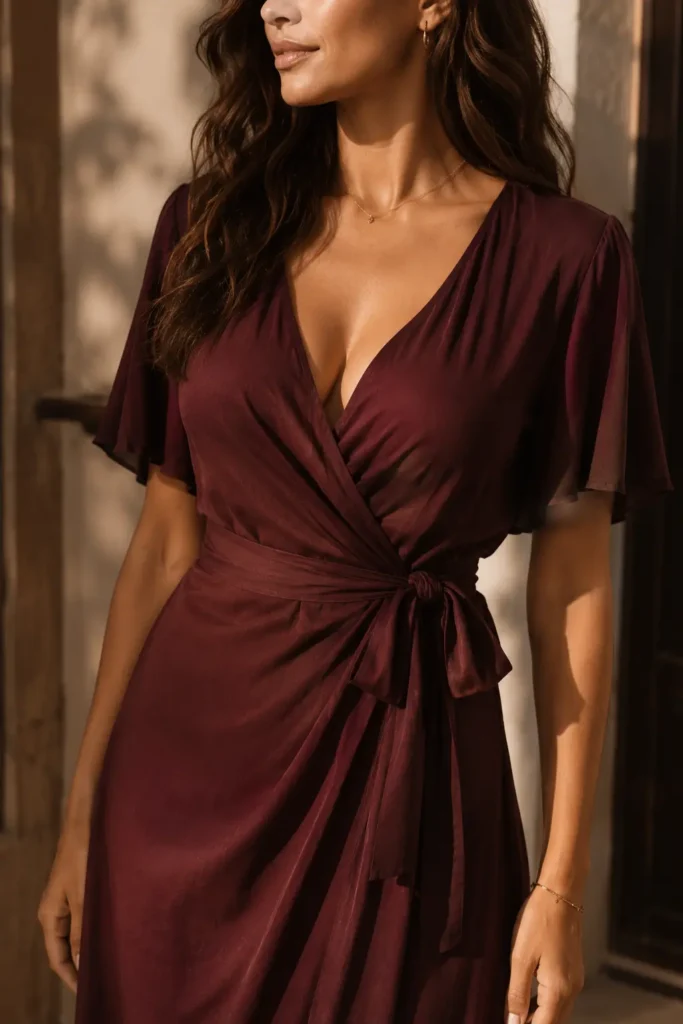
There aren’t many garment styles you can describe as genuinely universal. Most clothing flatters some bodies while awkwardly misaligning with others. Wrap silhouettes are the notable exception — and there are clear structural reasons why.
“The genius of the wrap dress is that it defines the waist without squeezing it. It works with your proportions rather than fighting them.”
Waist Definition Without Restriction
The tie at the waist creates the appearance of a narrower midsection without the discomfort of a fitted bodice. You control how tight it sits. This is especially valuable for women who want to suggest an hourglass shape without underwire structure or stiff boning.
Balanced Proportions Naturally
The V-neckline draws the eye upward and elongates the neck and torso. The flowing skirt softens the lower body. Together, they create a natural top-to-bottom balance that most structured cuts can’t achieve without precise tailoring. It’s body-flattering fashion that does the work for you.
Curves Without Adding Bulk
For straighter figures, the diagonal lines of a wrap dress create the suggestion of curves where there may be fewer. The crossover pulls fabric toward the waist rather than hanging straight, which is a simple but effective optical trick.
A Longer, Leaner Line
The diagonal of the wrap creates a vertical visual line from the shoulder down through the neckline. Combined with a longer hemline, this dramatically elongates how the body reads in a room. It’s one of the reasons wrap dresses are a favourite recommendation from stylists working with petite clients.
How Wrap Silhouettes Work for Different Body Shapes
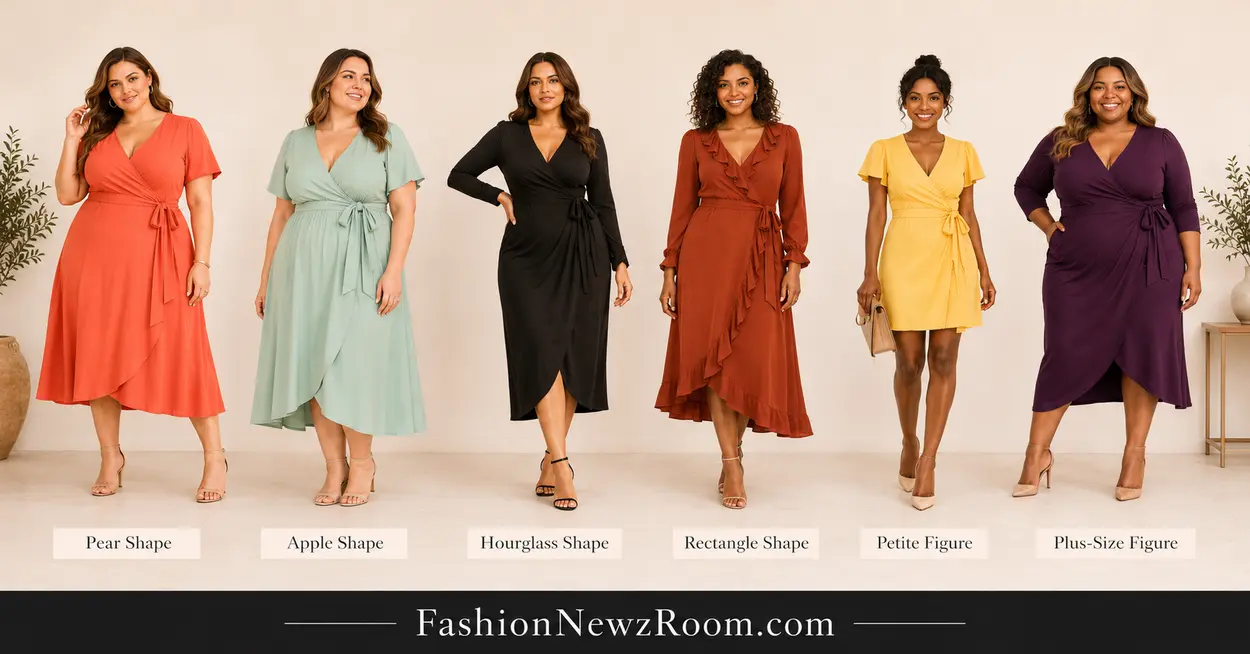
Let’s get specific. Here’s how to approach wrap dresses and wrap tops depending on your body shape — because the basics work for everyone, but small adjustments make a significant difference.
🍐 Pear Shape
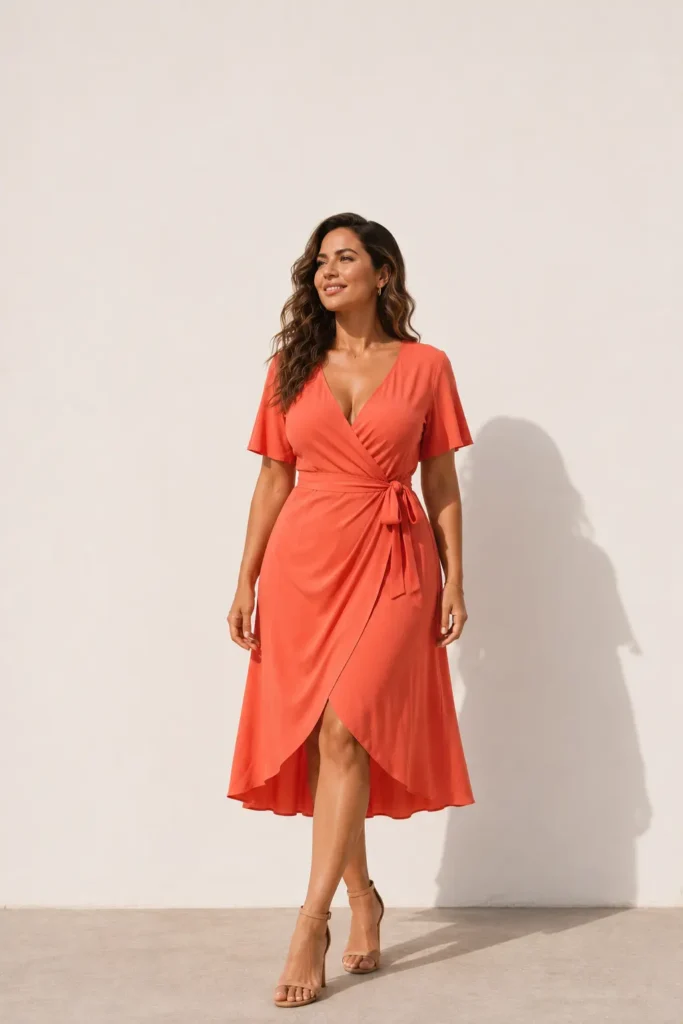
Pear shapes carry more volume below the waist. A wrap dress balances this beautifully — the V-neck adds visual width to the shoulders and chest, while a softly flared skirt skims over the hips without clinging. Look for wrap dresses with a slightly higher tie to emphasise the narrowest part of your waist.
🍎 Apple Shape
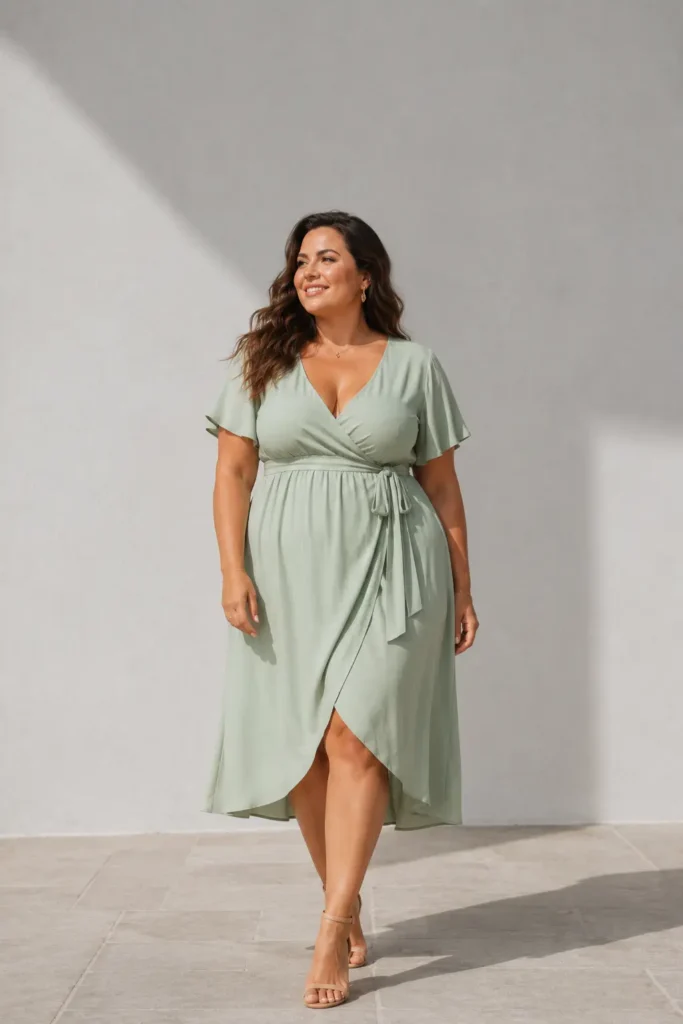
Apple shapes tend to carry weight around the midsection. A faux-wrap is often more comfortable here than a true wrap, since it creates the visual effect without pulling at the waist. Opt for wrap dresses with a looser waist tie and a deeper V-neckline to draw attention upward. Empire-waist wrap styles can also work exceptionally well.
⏳ Hourglass Shape
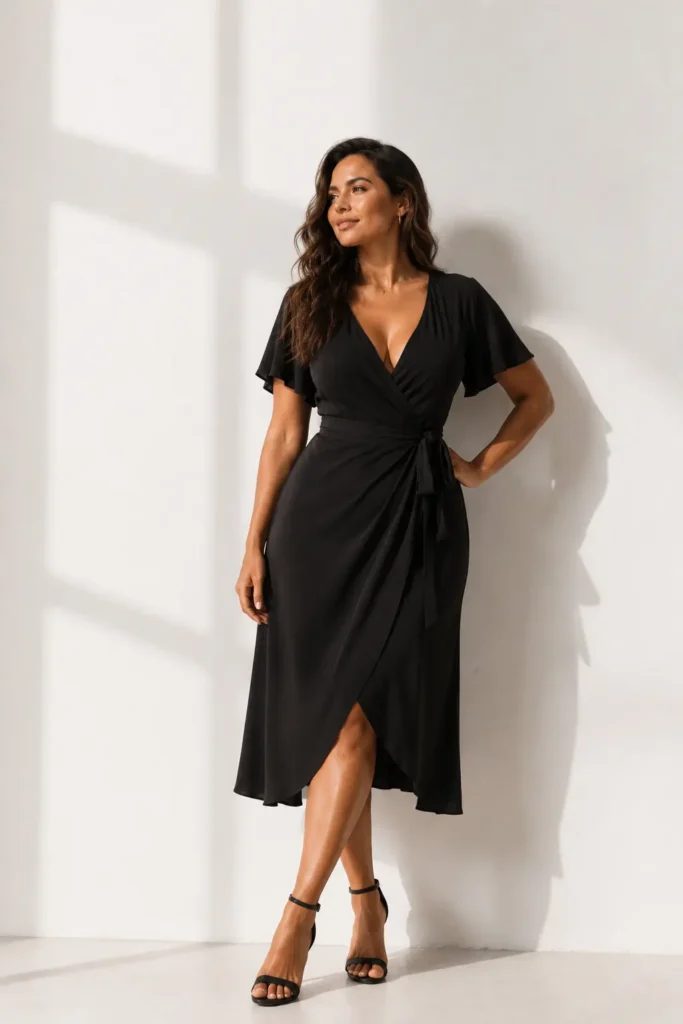
The wrap silhouette was practically designed for hourglass proportions. It traces the natural waist and follows the curve outward over the hips without adding unnecessary volume. A true wrap dress with a medium-length tie will accentuate all the right things. Don’t overthink it — most wrap styles will feel effortlessly good.
▭ Rectangle Shape
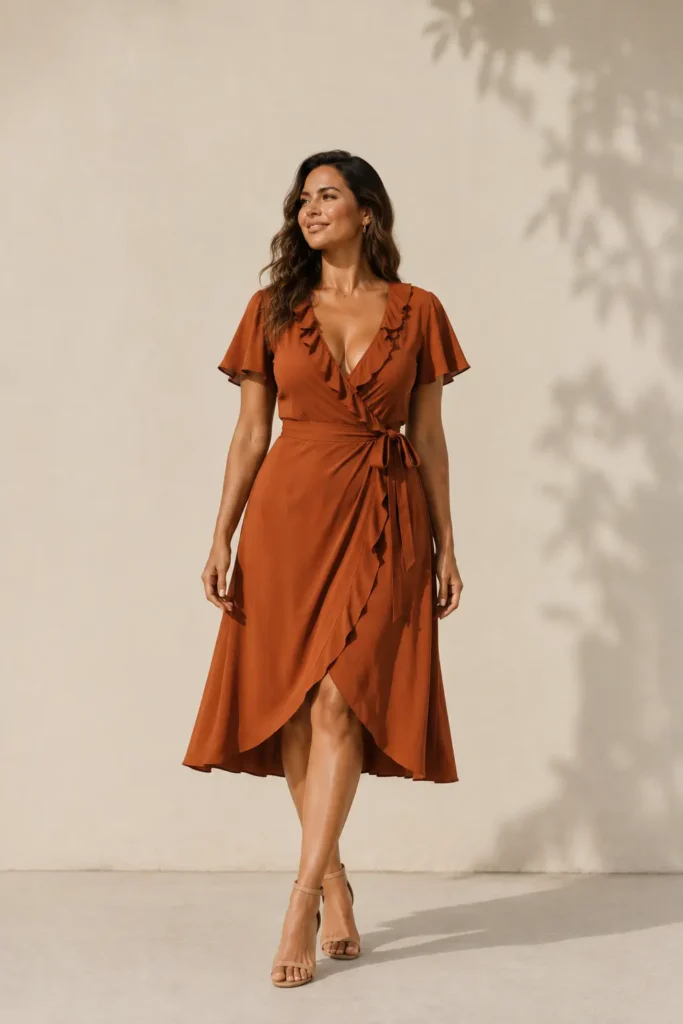
For rectangle shapes — where shoulders, waist, and hips are fairly similar in width — the wrap creates curves that aren’t naturally there. Tie the waist firmly and choose wrap dresses with ruffled or draped necklines for extra visual interest at the chest. A midi-length adds elegance and proportion.
📏 Petite Figures
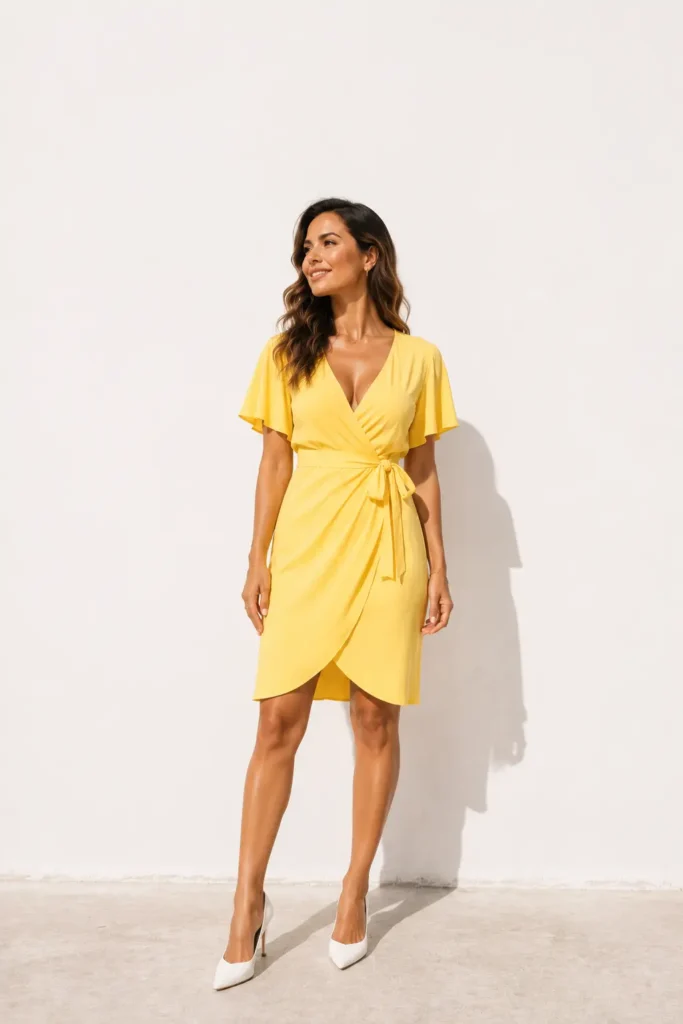
Wrap silhouettes are one of the best silhouettes for petite women. The vertical line of the V-neckline adds height visually. Choose shorter hemlines — just above the knee is ideal — to avoid overwhelming a smaller frame. Pair with heels or pointed-toe flats to continue the elongated line.
✨ Plus-Size Figures
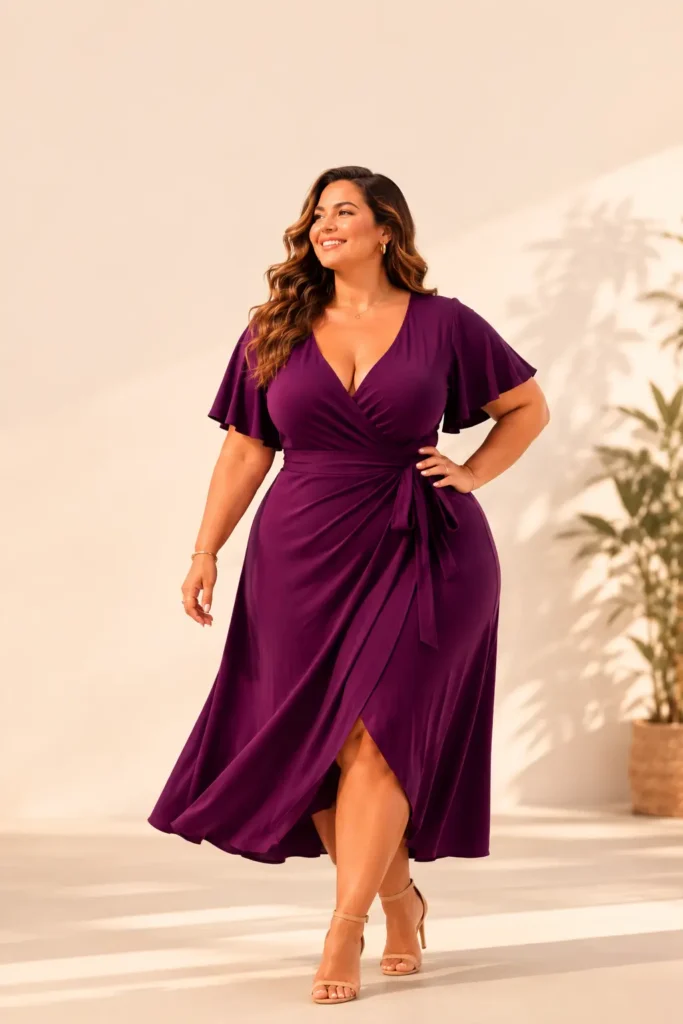
Absolutely yes — wrap silhouettes are among the most recommended styles for plus-size women, and for very good reason. They celebrate rather than constrict the body. Jersey wrap dresses with a waist tie offer comfort and definition simultaneously. Look for quality fabrics that don’t cling unflatteringly. According to style guides on Who What Wear, wrap dresses consistently rank as a top pick for full-figured styling.
Best Fabrics for Wrap Clothing
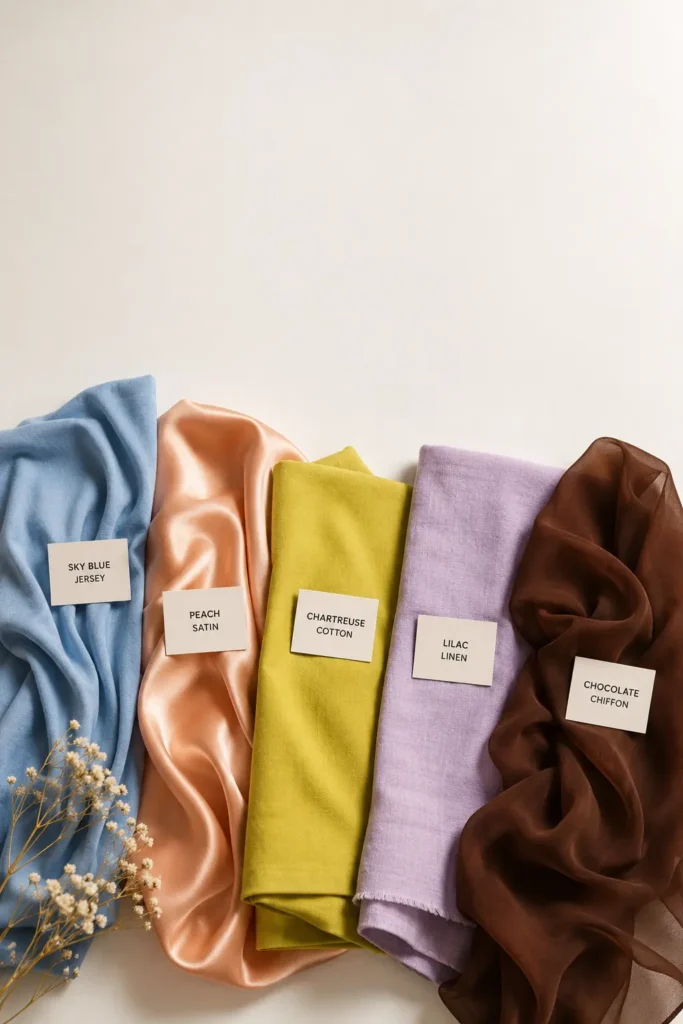
The silhouette matters, but so does the fabric. A wrap dress in the wrong material will either cling where you don’t want it to or hang lifeless and shapeless. Here’s what to look for.
Jersey
The gold standard for everyday wrap dresses. Jersey has a gentle stretch that accommodates movement without losing shape. It drapes softly over the body, doesn’t wrinkle easily, and is forgiving across a wide range of figure types. It’s the reason you can find jersey wrap dresses in virtually every high street store — they genuinely work.
Satin
For evening and occasion wear, satin elevates a wrap dress dramatically. The weight of the fabric means it drapes beautifully, and the sheen catches light in a way that feels luxurious. Best suited for hourglass and pear shapes where there’s natural curve for the fabric to follow.
Cotton
Casual, breathable, and ideal for warm weather. A cotton wrap dress feels relaxed without looking sloppy, especially in solid colours or classic prints. It does wrinkle — but that’s part of the charm for weekend and resort wear.
Linen
Similar to cotton in breathability, linen adds a more structured, sophisticated look. It’s especially popular for wrap-style blazers and tops in a minimalist wardrobe. Linen wrap dresses have had a significant moment in 2026 fashion trends, particularly in neutral tones.
Chiffon
For a soft, romantic look, chiffon wrap dresses are hard to beat. The fabric is delicate and semi-sheer, which means they’re typically layered. Ideal for wedding guest outfits, summer events, and resort wear. Note: chiffon requires more care in how it’s tied and worn, as it shifts easily.
Styling Tips to Make Wrap Silhouettes Look Even Better
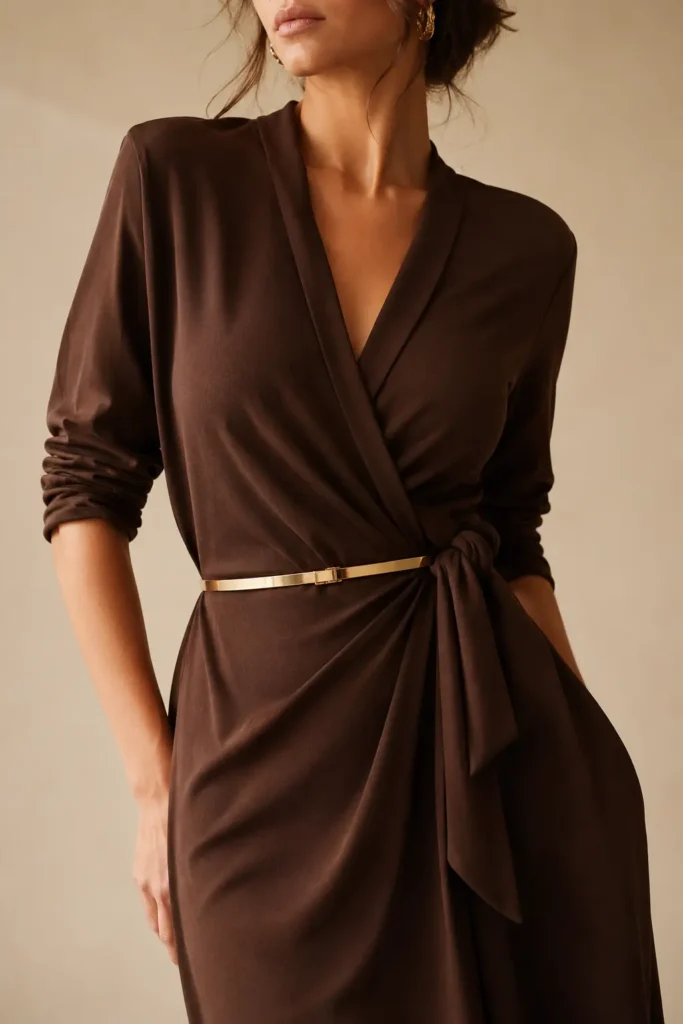
Even the best silhouette benefits from thoughtful styling. These are the adjustments that take a wrap outfit from good to genuinely impressive.
- Get the neckline right. The V-neckline is part of what makes wrap dresses so flattering — but make sure it’s sitting where you want it. Too wide and it can feel revealing; too narrow and you lose the elongating effect. Adjust the tie placement accordingly.
- Tie placement matters more than you think. On a true wrap dress, placing the knot slightly off-centre to the side (rather than dead centre) feels more modern and intentional. A side-tied bow also gives the waist a cleaner line.
- Think about your shoes last. Wrap dresses work with almost any footwear, but the choice dramatically changes the mood. Strappy sandals feel feminine and summery. Ankle boots make it edgier. Loafers or pointed mules pull it toward polished minimalism.
- Layer with intention. A wrap dress worn under a tailored blazer or a long-line cardigan becomes an entirely different outfit. For colder months, layering a turtleneck or fitted knit underneath a faux-wrap dress is a surprisingly chic option.
- Hemline is a height issue. If you’re petite, a hem just above the knee is usually the most flattering. If you’re tall, a midi-length looks sophisticated and elongated. For average heights, both work well — choose based on the occasion.
- Keep accessories clean. The wrap silhouette already has a lot going on — the V-neck, the tie, the drape. Opt for minimal jewellery. A single pair of earrings often does more than a full layered necklace.
Common Mistakes to Avoid
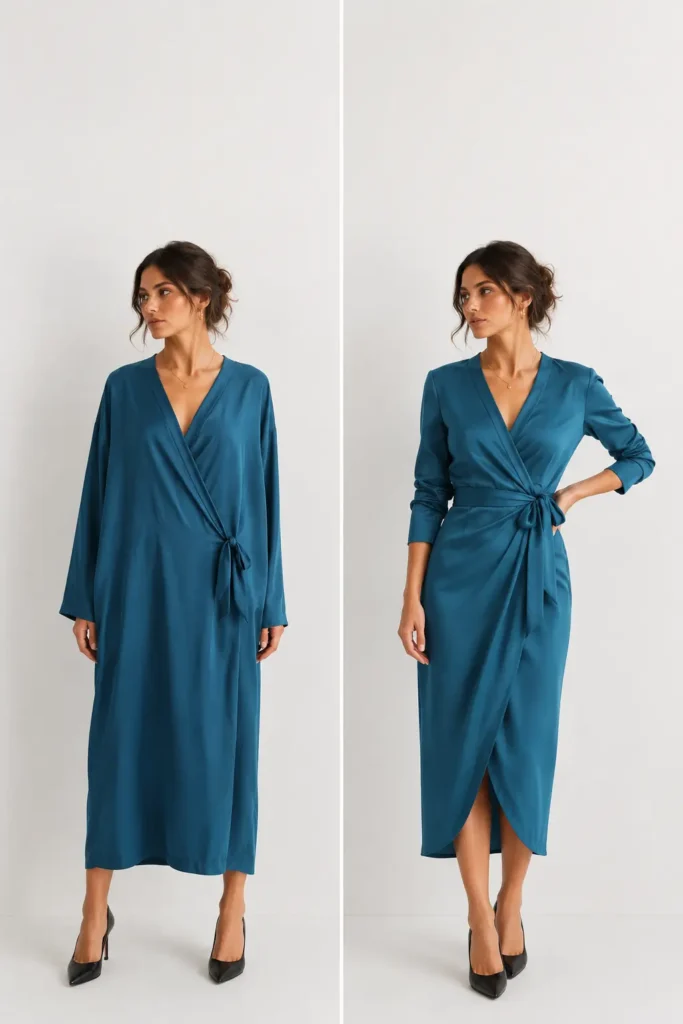
Wrap silhouettes are forgiving, but there are a few easy traps to fall into.
Going too big “just in case.” One of the most common errors is sizing up to avoid feeling constricted. But an oversized wrap dress loses all its defining power — it simply droops around the waist rather than cinching it. Buy your size (or a size down if you’re between sizes) and let the tie do the adjusting.
Choosing a stiff fabric. Wrap silhouettes need to move. A fabric that’s too rigid — heavy denim, structured canvas, thick synthetic blends — will fight the natural drape and leave you looking boxy rather than sleek. Prioritise softness and weight.
Placing the tie too low. If you tie at the hip rather than the natural waist, you lose the waist-defining effect entirely. Your natural waist is the narrowest point — usually a couple of inches above the belly button. Tie it there.
Wearing a safety pin but skipping the tie. Some women pin the neckline shut to avoid any potential gaps and then skip the waist tie for a “cleaner” look. This defeats the purpose. The tie is structural — it’s what creates the silhouette.
Over-layering. A wrap dress under a chunky knit, paired with a wide belt, worn over a turtleneck is too much competing structure. Pick one layering piece and let the wrap silhouette do the rest.
Wrap Silhouettes in Modern Fashion Trends (2026)
Far from fading, wrap silhouette trends in 2026 are as relevant as ever — just wearing different clothes, so to speak. Here’s where the style is showing up this year.
Minimalist Wrap Dresses
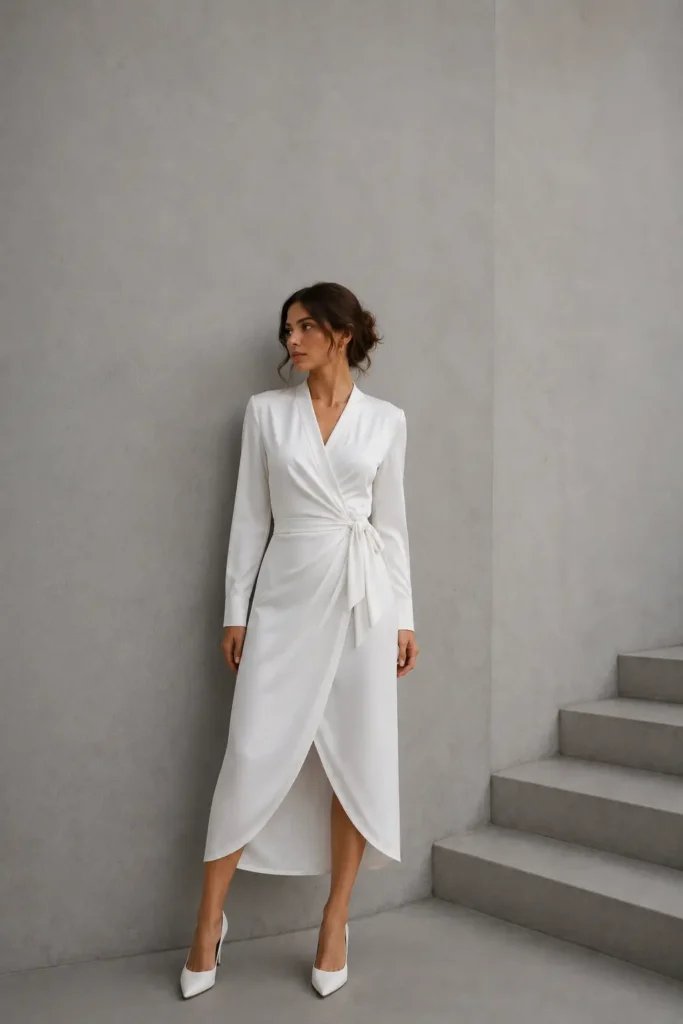
The “quiet luxury” movement — clean lines, neutral tones, no unnecessary details — has embraced the wrap dress wholeheartedly. A camel or ivory wrap dress in a good jersey or crepe fabric is the definition of effortless, elevated dressing in 2026. No print, no fuss, just proportion and cut.
Office Wear Wrap Dresses
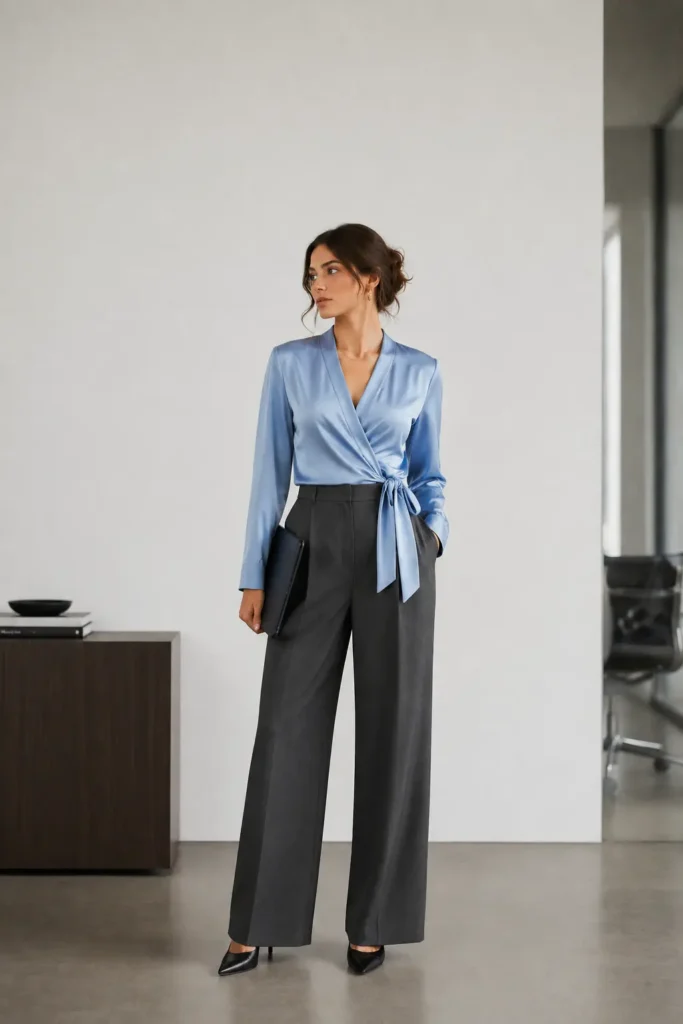
Wrap tops in silk or satin paired with wide-leg trousers are currently one of the strongest workwear looks of the year. They feel professional without being stiff, and the waist-defining element reads as polished rather than casual. Monochrome wrap top and trouser sets are particularly strong.
Modest Fashion Wrap Maxi Dresses
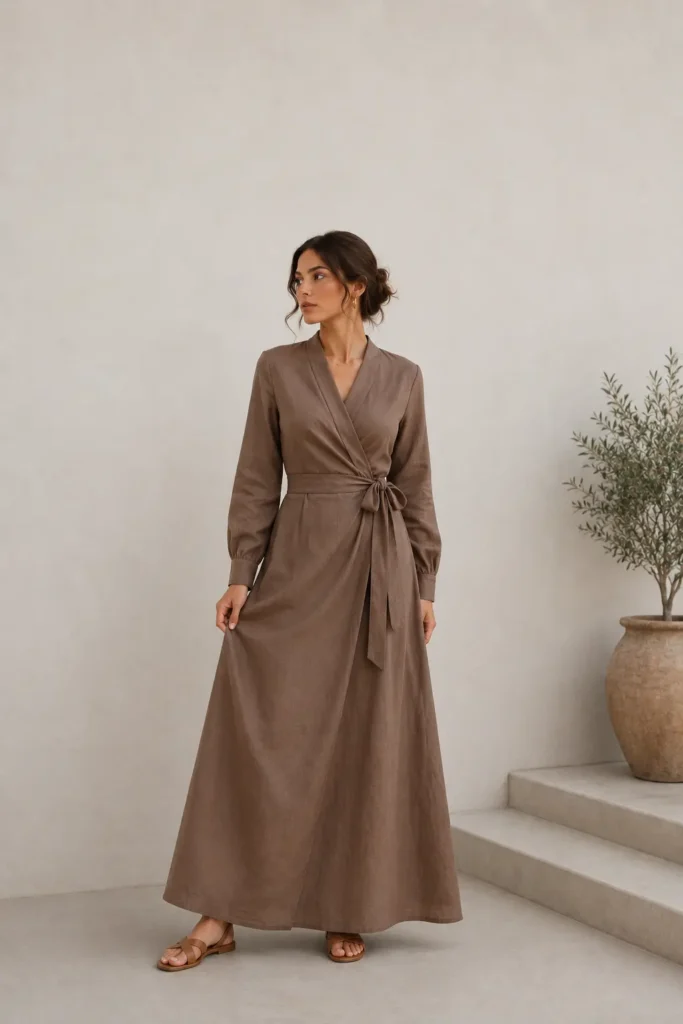
In the modest fashion space, the wrap silhouette has found a natural home. Longer wrap skirts, maxi-length wrap dresses, and wrap tops layered over high-neck base layers offer full coverage that doesn’t compromise on style. Linen and cotton versions are particularly popular in this community.
Resort and Street Style Wrap Dresses
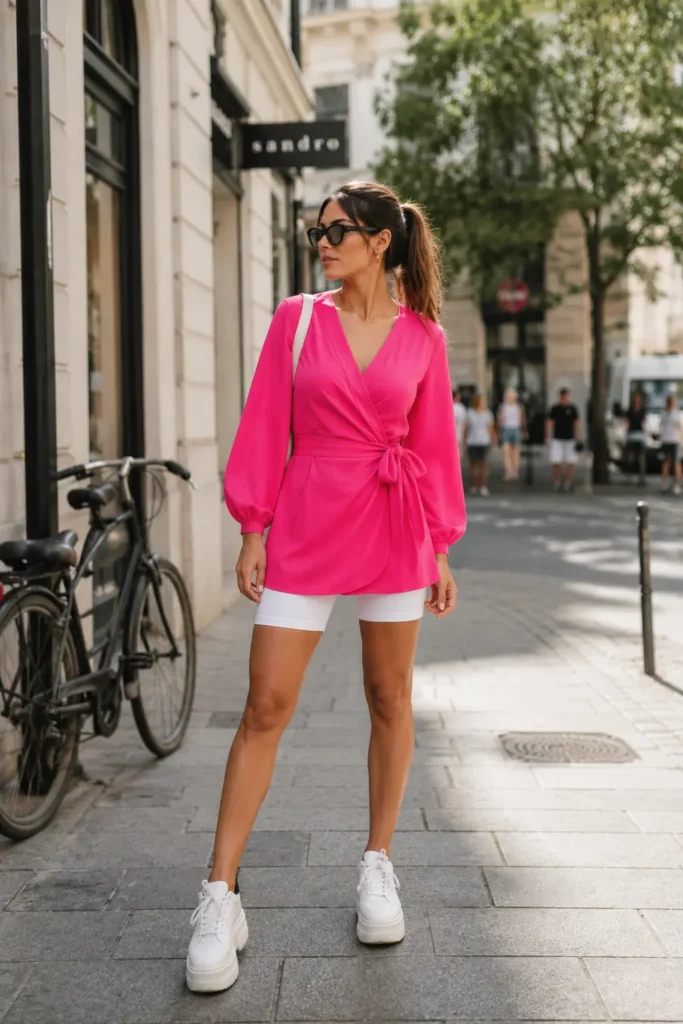
Lightweight chiffon and cotton wrap dresses remain the dominant resort wear choice. On the street style side, wrap mini dresses layered over bike shorts or worn with chunky white trainers have been circulating heavily on social media and at fashion weeks globally.
Celebrity & Influencer Inspiration Wrap Dresses
The wrap silhouette has a remarkably consistent presence across fashion media — from glossy magazine spreads to everyday Instagram posts. That’s telling.
Red Carpet Wrap Dresses
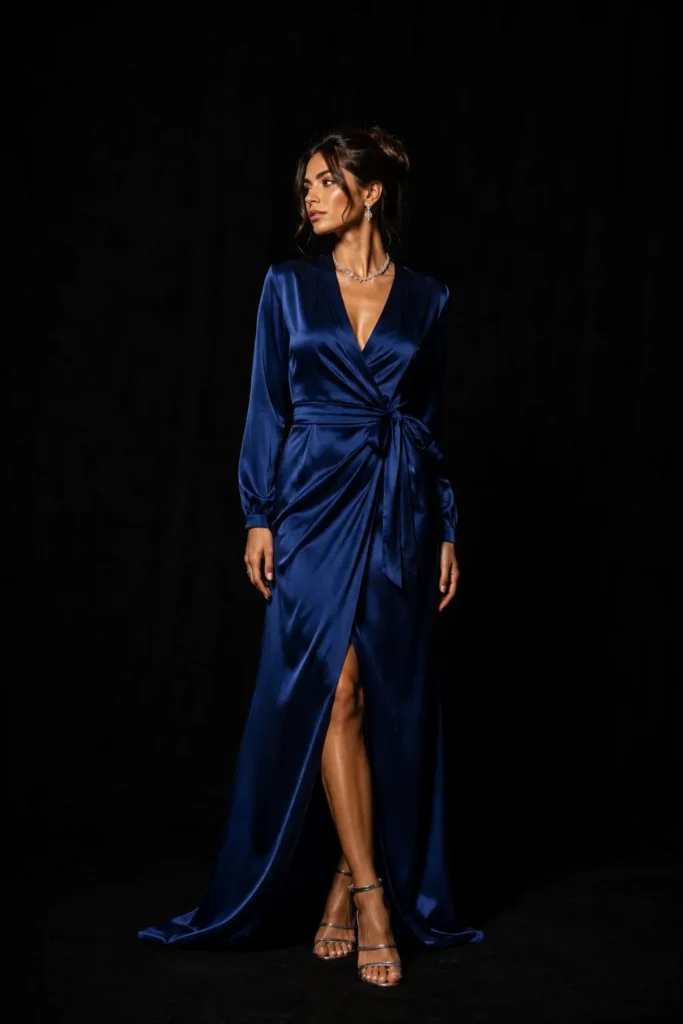
Across red carpets, the wrap dress has appeared in elegant floor-length satin cuts, high-fashion interpretations by houses like Diane von Furstenberg, and contemporary minimalist versions from brands like Reformation. The common thread? These dresses photograph exceptionally well. The diagonal lines and defined waist read clearly even in a still image.
Street Style Wrap Dresses
Street style photography has long loved a good wrap dress, too. The style works with everything from a clean sneaker to a towering heel, which makes it endlessly adaptable for photographers capturing everyday fashion. The body-flattering quality also means it tends to look strong from any angle.
Social Media Influencer Wrap Outfit
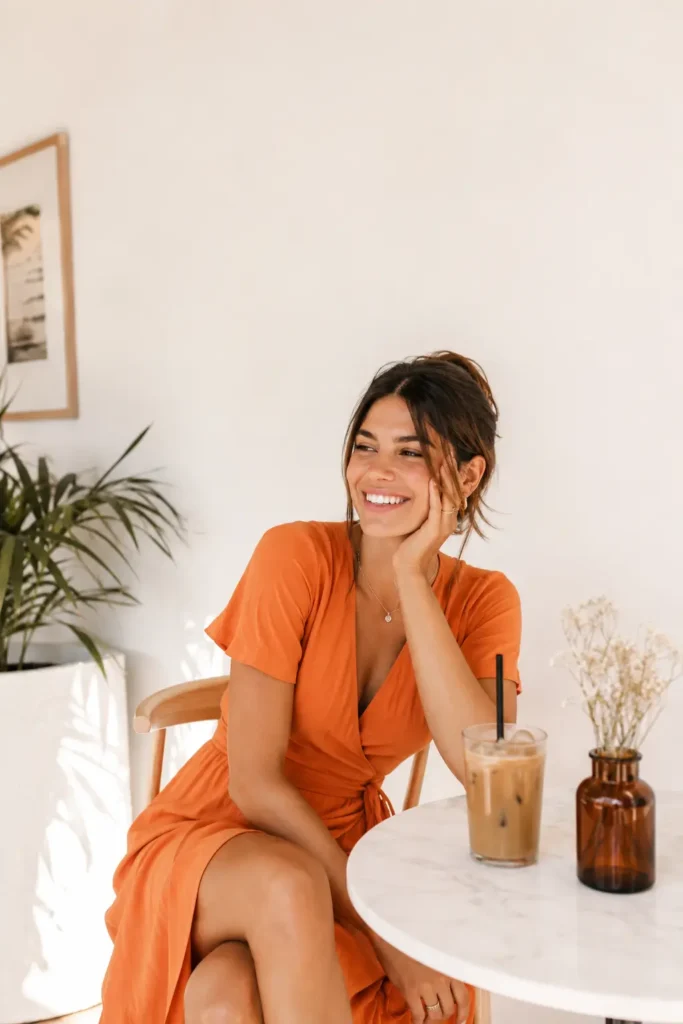
On social media, the wrap silhouette appears consistently in “outfit of the day” and “get ready with me” content from fashion creators across all size ranges. One of the reasons it performs so well in this format is simple: it flatters naturally, and it’s easy for viewers to imagine it on themselves. The best wrap dresses for curves in particular generate significant engagement because they address a real and common styling question.
The lesson from all of this is that wrap silhouettes don’t need a particular season or trend cycle to feel relevant. They generate their own visual confidence.
FAQ — Your Wrap Silhouette Questions Answered
1. Are wrap dresses flattering for all body types?
Yes — with small adjustments for each shape. Wrap dresses are considered one of the most universally flattering silhouettes in fashion because they define the waist, create balanced proportions, and work with natural curves rather than against them. The tie is adjustable, which means the fit adapts rather than dictating.
2. Can plus-size women wear wrap silhouettes?
Absolutely. Wrap silhouettes are a strong recommendation for plus-size figures. A jersey wrap dress defines the waist without constricting it, and the diagonal neckline creates a visually elongated, balanced look. The key is choosing fabrics that drape well (jersey, satin, chiffon) and avoiding overly stiff materials that don’t move naturally with the body.
3. What fabrics work best for wrap dresses?
Jersey is the most popular everyday choice due to its drape, stretch, and easy care. For evening, satin or chiffon elevates the look. For casual or warm-weather wear, cotton and linen are excellent options. Avoid stiff, heavy fabrics — they fight the natural movement that makes wrap silhouettes work.
4. Are wrap silhouettes good for petite women?
Yes, they’re one of the better options for petite figures. The V-neckline creates a vertical line that adds visual height. For best results, choose a hemline just above the knee (rather than midi or maxi, which can overwhelm a smaller frame), and pair with pointed-toe shoes to continue the elongated effect.
5. How tight should a wrap dress fit?
Snug enough to define the waist clearly, but not so tight that it pulls or strains. The waist tie should sit at your natural waist (the narrowest point, slightly above the belly button) and create a clean, defined line without bunching or puckering. If the tie is creating visible fabric stress, the dress is likely a size too small.
6. What’s the difference between a true wrap dress and a faux-wrap?
A true wrap dress has actual overlapping fabric that ties at the waist — you can adjust how tightly it wraps. A faux-wrap is sewn to look like a wrap but doesn’t actually open or tie; the waist definition is built in. Faux-wraps are often more practical for all-day wear (no worrying about retying) while true wraps offer more flexibility in fit.
7. Can you wear a wrap dress to a formal event?
Yes — it depends on the fabric and styling. A floor-length satin or chiffon wrap dress is entirely appropriate for formal occasions. Elevate it with minimal fine jewellery, a clean updo, and strappy heels. The key is choosing a fabric that reads as occasion-appropriate rather than casual.
Final Thoughts
There are plenty of trends that come and go, and plenty of styling rules that turn out to apply only in theory. Wrap silhouettes are neither of those things. They are one of the few genuine fashion tools — a design that does real structural work for your proportions, adapts to your body rather than fighting it, and somehow manages to feel both timeless and current every single season.
The best starting point? One good jersey wrap dress in a neutral. Wear it enough to understand how it moves on your body, how to tie it, where to place the knot. After that, the whole category opens up — wrap tops, faux-wrap blouses, silk versions for evening. Once you understand how slimming fashion silhouettes work, you’ll find yourself reaching for them over and over.
Don’t wait for the perfect moment or the perfect body. Put on a wrap dress and see what happens.