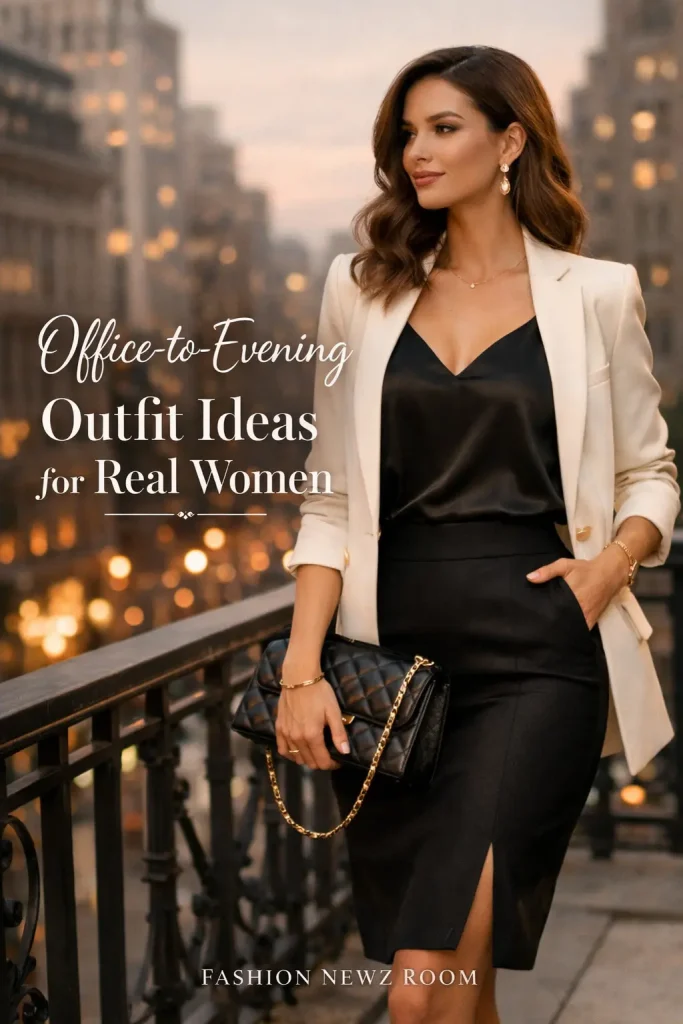
There’s a particular moment that happens around 4:45 p.m. in offices across the United States. Laptops are still open. Emails are still coming. But the mind has already shifted. Dinner plans. A friend’s birthday. A gallery opening. A date that started as “maybe” and quietly turned into “definitely.”
The question isn’t whether you’ll go. It’s whether what you’re wearing can come with you.
Office-to-evening dressing isn’t about pulling off a dramatic transformation in a bathroom mirror. It’s quieter than that. It’s about clothes that understand real schedules, real bodies, real cities, and the way women actually move through their days. And it’s something women think about more than they admit—especially now, when workdays rarely stay neatly contained.
Why this conversation keeps coming up
Table of Contents

At FashionNewzRoom.com, this topic circles back again and again, usually in the comments or side notes, not in bold headlines. Women talking about keeping heels under their desk. About choosing tops that survive Zoom meetings and dim restaurant lighting. About wanting to feel put together at 9 a.m. and still like themselves at 8 p.m.
This matters because fashion doesn’t exist in separate compartments anymore. Work bleeds into life. Life bleeds into work. And the clothes that succeed are the ones that quietly adapt without asking for too much effort.
The foundation: clothes that don’t panic after 5 p.m.
The most successful office-to-evening outfits usually start with restraint. Not boring restraint—intentional restraint.
Think tailored trousers that skim instead of cling. Blouses with interesting sleeves or subtle texture instead of loud prints. Dresses that hold their shape but don’t feel stiff by mid-afternoon.
One thing seasoned editors learn early: if an outfit looks like it’s trying too hard during the day, it will feel awkward at night. And if it’s overly corporate, it can feel emotionally exhausting to carry into personal time.
The sweet spot lives somewhere in between.
The quiet power of the right dress
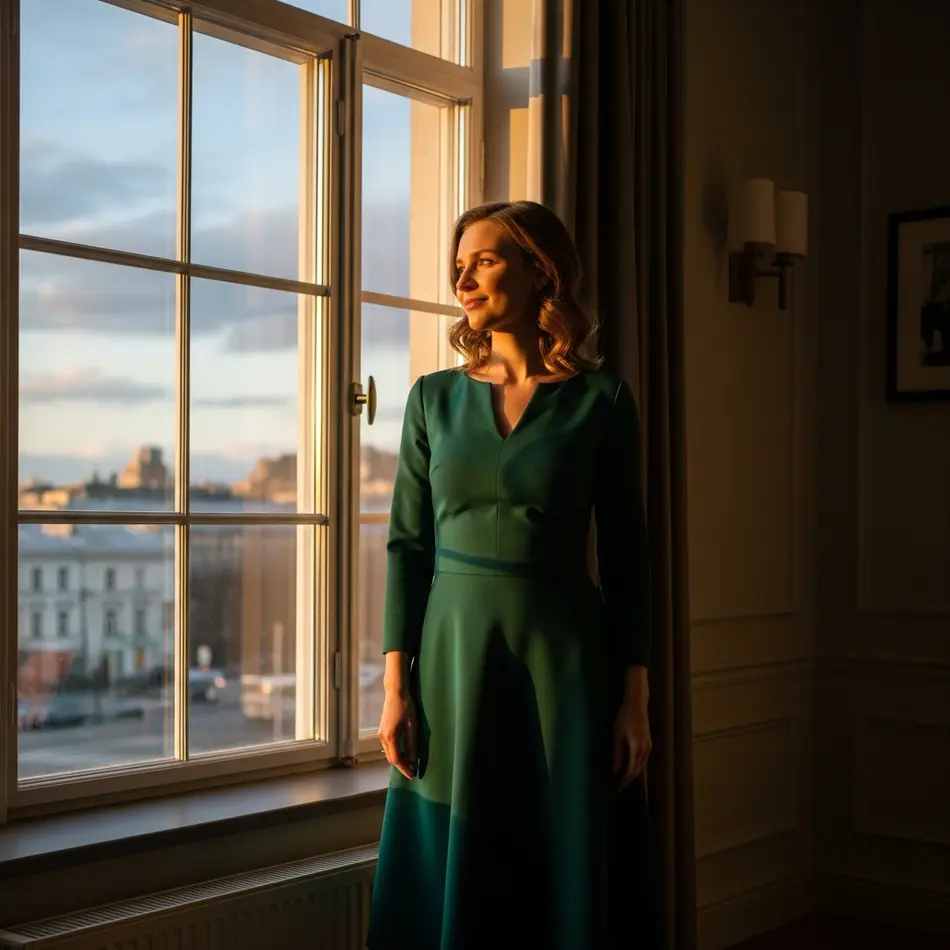
A dress is often the easiest bridge between office and evening, but only if it’s chosen carefully. In many U.S. workplaces, the line between acceptable and uncomfortable is thin, especially in warmer months.
Midi dresses tend to do the most work here. A soft wrap style, a column dress with stretch, or a subtly belted silhouette can pass a daytime meeting without comment, then soften beautifully under evening lights.
What matters is fabric. Crepe, matte satin, or fine knit blends move differently than stiff cotton or loud synthetics. They don’t wrinkle the second you sit. They don’t shout “daytime” or “after-hours.” They just exist comfortably in both worlds.
And yes, color plays a role. Navy, olive, chocolate brown, muted wine—these shades read professional in daylight and richer after dark. Black works too, but only when the cut does some talking.
Blazers that know when to loosen up

The blazer has quietly evolved in American offices. It’s no longer just a symbol of authority—it’s a layering tool.
For office-to-evening dressing, the best blazers aren’t overly structured. Slightly relaxed shoulders, a softer lapel, maybe even a fabric with a hint of drape. These pieces look polished at 10 a.m. and effortlessly cool slung over a chair at dinner.
Some women keep the blazer on but swap what’s underneath. A daytime shell top becomes a silk camisole. A button-down gets half-unbuttoned, sleeves rolled once more. The blazer stays; the mood changes.
That shift—small, intentional—is often all it takes.
Shoes: the real decision point
No piece reveals intent quite like shoes.
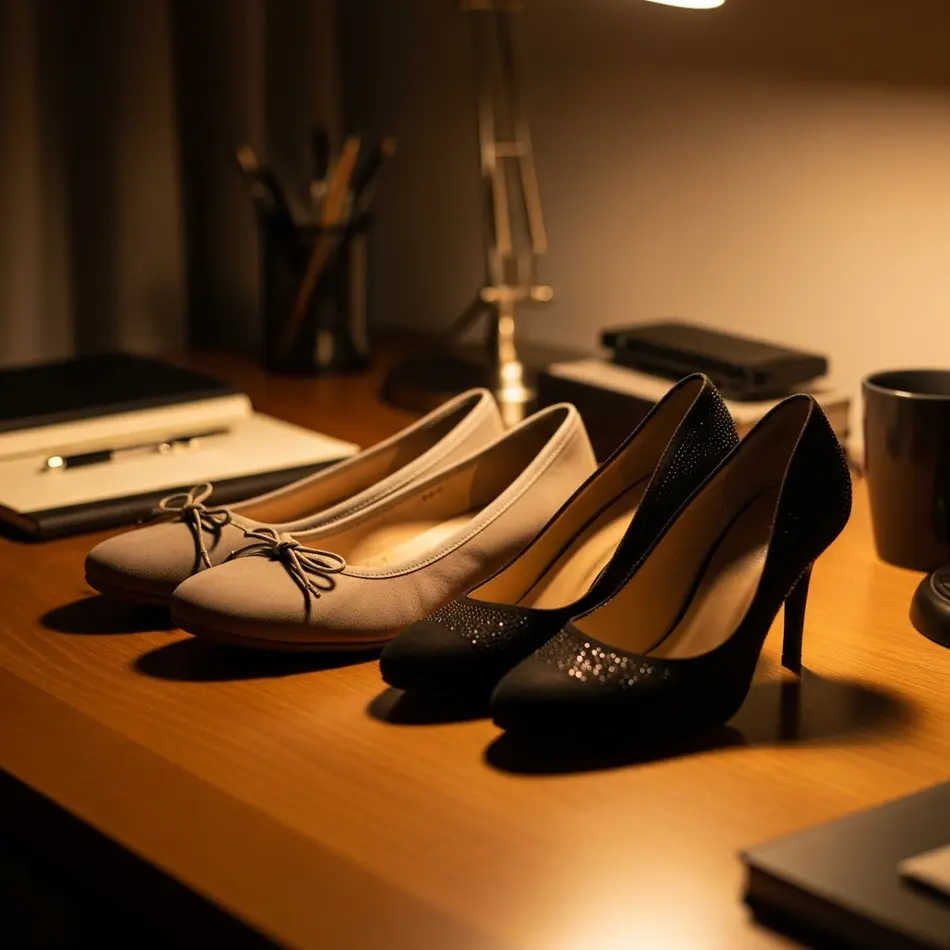
Many women across the U.S. have mastered the desk shoe strategy. Practical flats or low block heels for the day, something sharper waiting patiently in a tote. The evening shoe doesn’t have to be dramatic. It just has to signal that the workday is over.
Pointed-toe heels, sleek ankle boots, even refined loafers in leather or suede can carry an outfit forward without screaming “night out.” Comfort matters here more than trends. There’s nothing stylish about spending dinner thinking about your feet.
At Fashion Newz Room, editors often joke that shoes are where honesty shows up. If a woman plans to stay out, she dresses for it—even subtly.
Pants that don’t clock out early
Not all trousers are created equal. Some feel tired by mid-afternoon. Others somehow get better as the day goes on.
High-waisted tailored pants with fluid movement tend to hold up best. They don’t need constant adjusting. They don’t lose their shape after hours of sitting. And when paired with the right top, they can feel intentional rather than utilitarian.
A silk blouse tucked in for work can be untucked slightly or swapped for a knit top in the evening. The pants stay. That’s the point.
Even dark denim—when cut clean and styled thoughtfully—has earned its place in many modern offices. Especially in creative or hybrid environments, a polished jean can move seamlessly into evening plans without apology.
Accessories as quiet translators
Accessories often do the emotional work of an outfit.
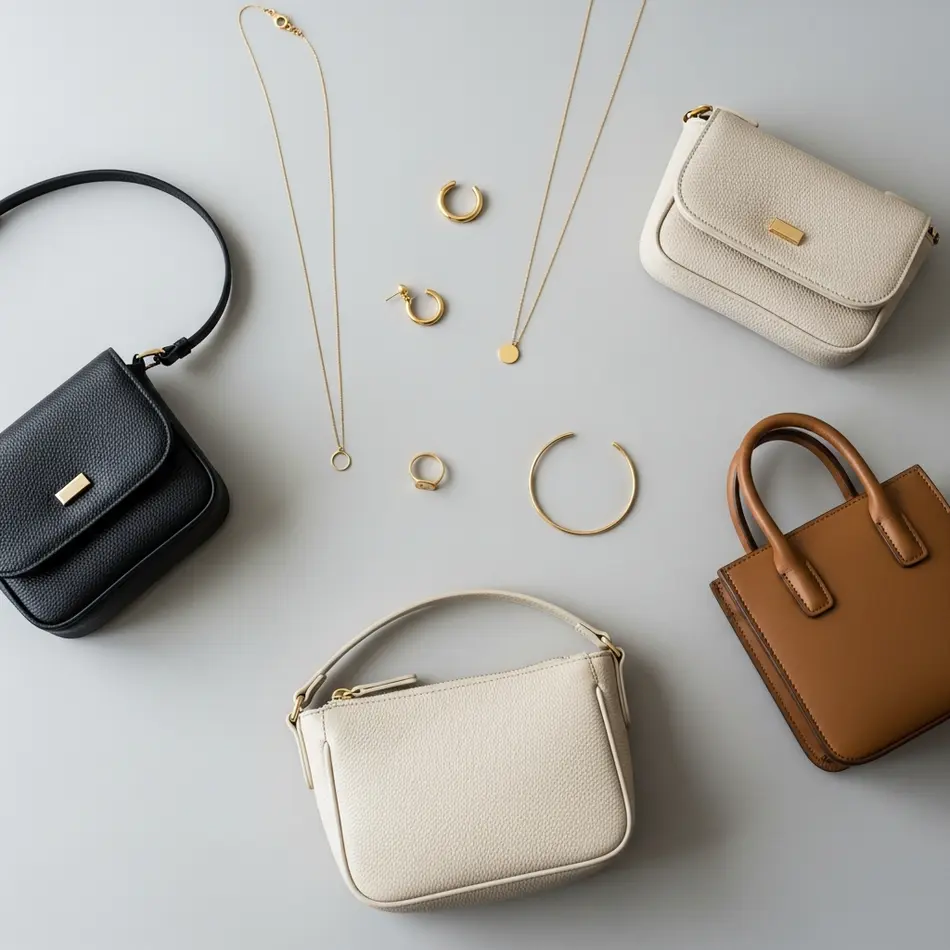
A structured tote becomes too serious at dinner. That’s where a smaller bag steps in. Jewelry, too, shifts the tone. Studs give way to hoops. A watch comes off. A chain necklace catches the light differently after sunset.
These aren’t dramatic changes. They’re signals. To yourself, mostly.
There’s something grounding about that small ritual—closing a laptop, switching shoes, adding a touch of shine. It marks a transition that many women don’t otherwise get.
When layering does the heavy lifting
American weather is unpredictable, and office temperatures are rarely logical. Layering becomes less about warmth and more about control.
A lightweight cardigan, a fine-gauge sweater draped over shoulders, or even a scarf can transform an outfit’s feel without changing its core. The same dress looks entirely different with bare arms versus a soft layer.
The trick is choosing layers that don’t overwhelm. Bulky knits or stiff jackets tend to lock an outfit into one category. Softer pieces allow flexibility.
The role of personal style (and why it matters)
This is where the conversation gets personal.
Office-to-evening dressing only works when it aligns with who you are. If you never wear heels, forcing them for dinner won’t suddenly feel empowering. If you love color, muting yourself all day won’t magically translate into confidence at night.
One reason this topic resonates so strongly is because women are tired of costumes. They want clothes that support their lives, not dictate them.
At Fashion Newz Room, this comes up often in reader stories—women rediscovering pieces they already own by styling them differently. The realization that the answer isn’t more clothes, but better understanding of what actually works.
Real-life moments that shape these outfits
Think about the days that don’t follow a script.
The coworker who suggests drinks at the last minute. The client meeting that ends early. The unexpected invite you almost decline because you’re already dressed.
Office-to-evening outfits exist for those moments. They make saying yes easier. They remove friction from social life instead of adding to it.
That’s not shallow. That’s practical.
A note on comfort (because it’s not negotiable anymore)
Comfort used to be something women were expected to sacrifice quietly. That era is fading.
Stretch fabrics, breathable materials, shoes you can actually walk in—these aren’t indulgences. They’re requirements. An outfit that looks good but feels wrong will never survive from morning to night.
The most stylish women aren’t uncomfortable ones. They’re the ones who look relaxed, present, and at ease in their own skin.
Why this topic genuinely matters right now
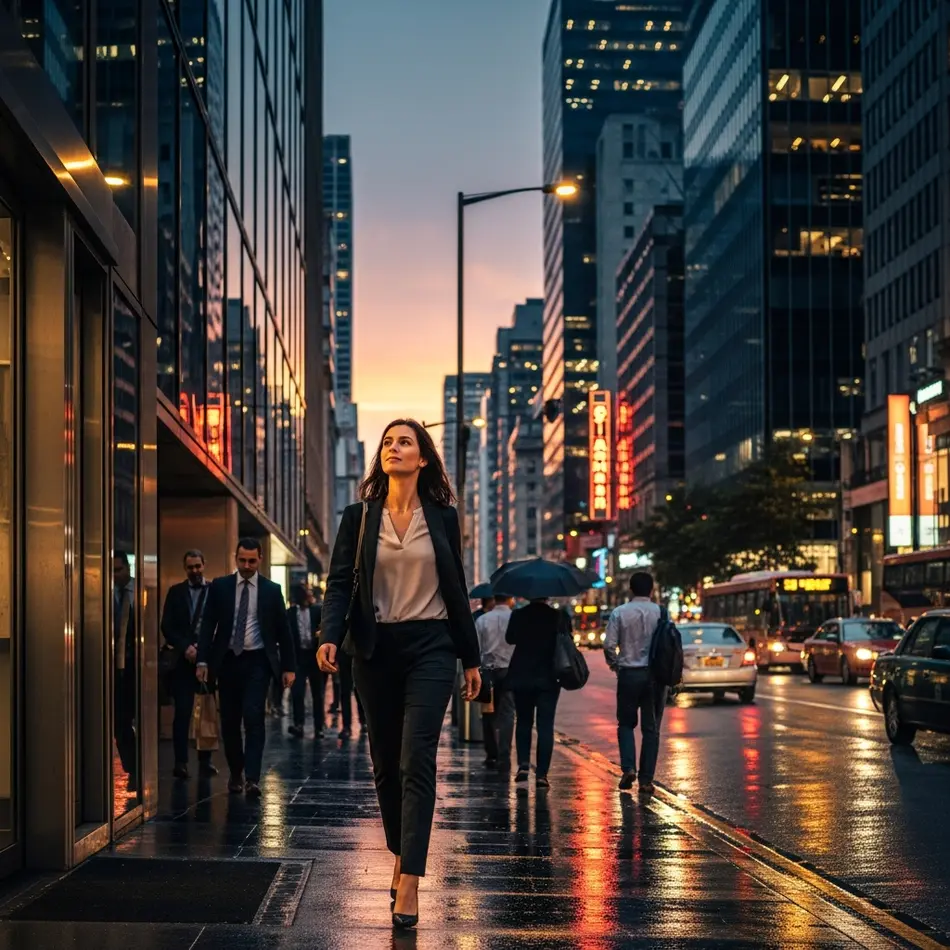
There’s a larger shift happening beneath all of this.
Women are renegotiating how much of themselves work gets to consume. Clothing plays a role in that negotiation. When outfits can transition without effort, it creates space—mental and emotional—for life outside the office.
Office-to-evening dressing isn’t about efficiency for its own sake. It’s about continuity. About not having to switch identities halfway through the day. About showing up as the same person, just in a slightly different light.
That’s why this conversation keeps resurfacing. Not because of trends, but because of lived experience.
Soft realities, not rigid rules
There’s no formula that works for everyone. City life differs from suburb life. Office culture varies wildly. Bodies change. Schedules shift.
The best advice is observational, not prescriptive. Notice what you reach for on days that flow easily. Pay attention to the outfits that don’t make you rush home to change.
Those pieces are telling you something.
And maybe that’s where the real style lesson lives—not in transformation, but in continuity. In clothes that quietly stay with you as the day unfolds, without demanding center stage.
Sometimes, that’s more than enough.
Found this helpful? Save it to your Pinterest board!