Let’s be honest — layering sounds easy until you’re standing in front of your mirror looking like you grabbed everything off the rack and put it on at once. Too many pieces, too much volume, and suddenly an outfit that was supposed to look chic feels more like a bundle of fabric. Sound familiar?
The truth is, layering is one of the most powerful styling techniques in fashion — but only when it’s done with intention. It’s not just about staying warm or following seasonal trends. It’s about understanding how different pieces of clothing work together to shape, balance, and elevate the way you look and feel.
Here’s the thing most people miss: layering isn’t one-size-fits-all. What works beautifully on one body can feel completely off on another. And that’s not a flaw — it’s actually an opportunity. When you understand your body shape and learn how to layer for it, the results can be genuinely transformative.
This guide is all about helping you do exactly that. Whether you’re petite, curvy, athletic, or anywhere in between, there are specific layering techniques that can create balance, define your silhouette, and make every outfit feel intentional. Let’s get into it.
Understanding Different Body Shapes Before Layering
Table of Contents
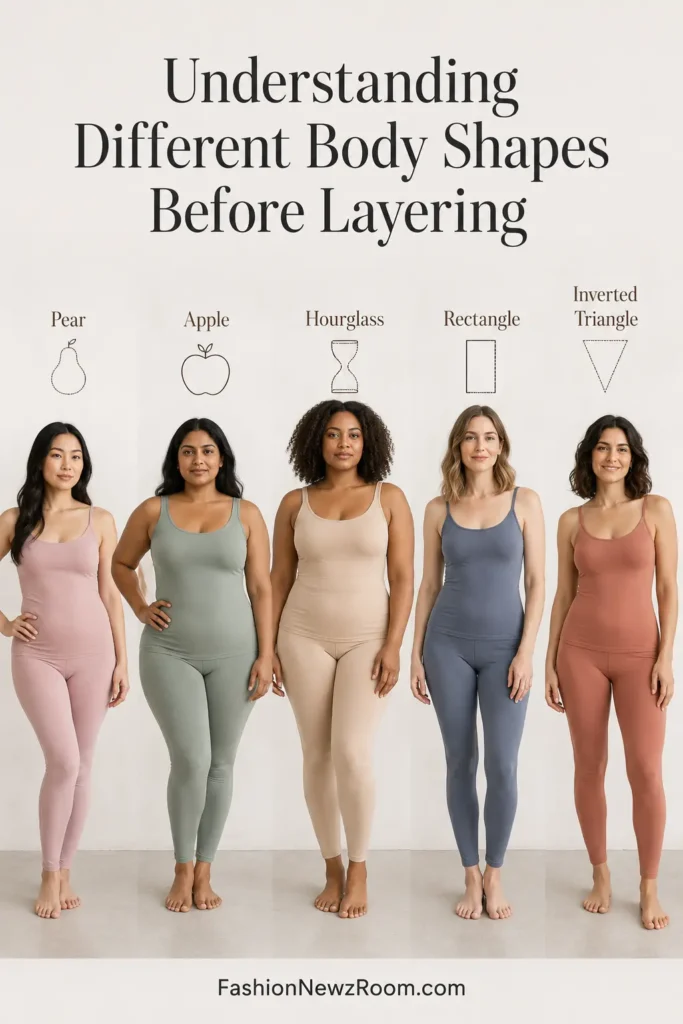
Before diving into the actual techniques, it helps to understand what body shape you’re working with. Not to put yourself in a box — but to know where to add visual weight and where to keep things simple.
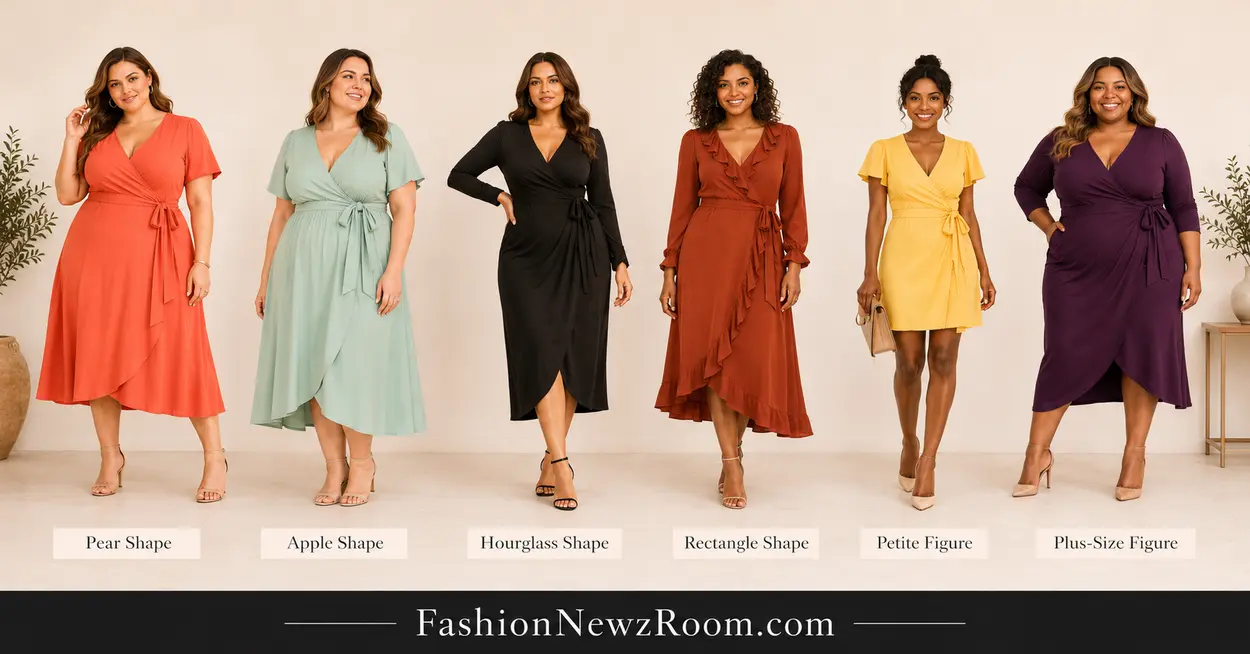
Pear Body Shape
A pear-shaped body typically has narrower shoulders and a smaller bust compared to wider hips and a fuller lower body. The waist is usually defined. The layering goal here is to draw the eye upward — toward the shoulders, neckline, and bust — while keeping the lower half clean and streamlined.
Apple Body Shape
Apple-shaped bodies carry more weight around the midsection, with a less defined waist. Shoulders and hips tend to be similar in width. The challenge is creating the illusion of a waistline without adding bulk. Layering should lengthen and elongate the torso rather than cinch or cut across it.
Hourglass Body Shape
An hourglass figure has a well-defined waist with balanced bust and hip measurements. This is arguably the most versatile shape for layering, but the risk is covering up those natural proportions with oversized or boxy pieces. The goal is to maintain the waist definition while adding layers that complement — not hide — the silhouette.
Rectangle Body Shape
Rectangle body types have similar measurements across the shoulders, waist, and hips, creating a straighter, more athletic silhouette. There’s little natural curve definition, so layering should add the illusion of shape — through texture, structure, and strategic volume placement.
Inverted Triangle Body Shape
An inverted triangle body has broader shoulders compared to narrower hips. The upper body is the dominant feature. Layering for this shape means softening the shoulder area while adding fullness and interest below the waist to create a more balanced look.
Why Layering Is Important in Fashion Styling
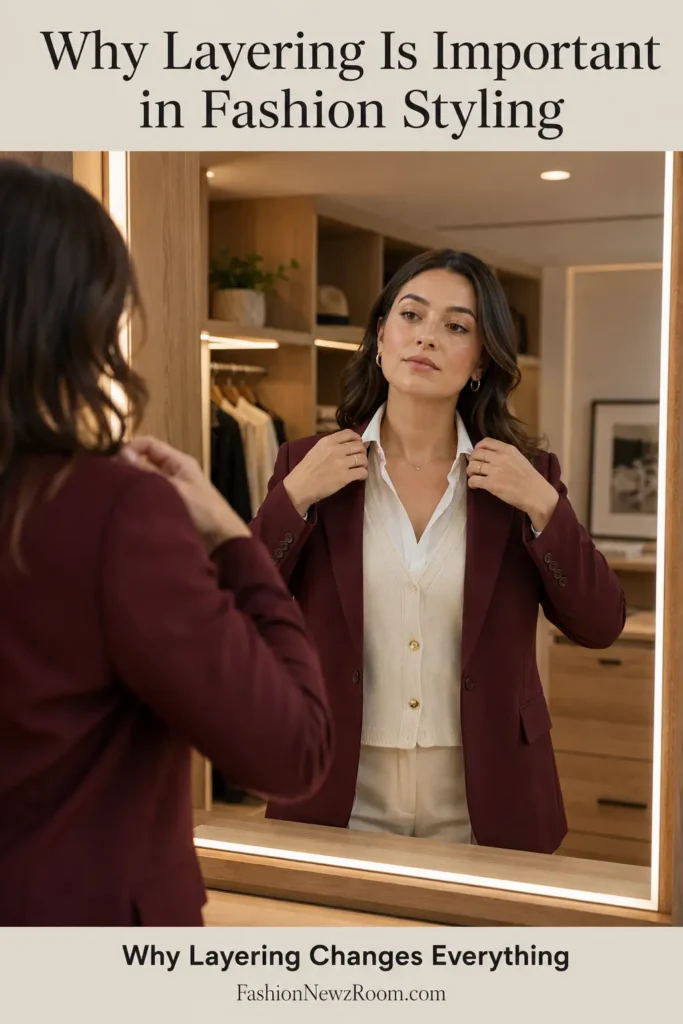
Layering gets talked about a lot in fashion, but it’s worth pausing to ask — why does it actually matter?
For starters, layering is one of the few styling techniques that works on multiple levels simultaneously. It adds depth to an outfit. It can restructure proportions. And honestly, it just makes clothes look more considered and intentional — the difference between someone who got dressed and someone who styled an outfit.
It creates visual balance. By strategically adding or removing volume in certain areas, layering helps correct natural asymmetries in the body. A structured blazer worn over a simple tee, for example, adds width to the shoulders — which is exactly what a pear-shaped body benefits from.
It adds dimension and texture. A flat, single-layer outfit rarely reads as interesting from across a room. Layers — whether through fabric weight, colour contrast, or silhouette — give an outfit that “there’s something to look at here” quality.
It defines proportions. Open-front cardigans create a long vertical line. Cropped jackets emphasise the waist. Longline coats draw the eye downward. Each of these is a proportioning tool disguised as clothing.
It makes outfits look more polished. There’s a reason stylists and fashion editors almost always layer. A single piece is fine. Multiple pieces working together? That’s a look.
It also offers year-round flexibility. When you know how to layer, you’re not limited by seasons. A slip dress can work in summer (with sandals), autumn (with a turtleneck underneath), and winter (with a coat and boots). That’s serious value from one item.
Best Layering Techniques for Pear Body Shape
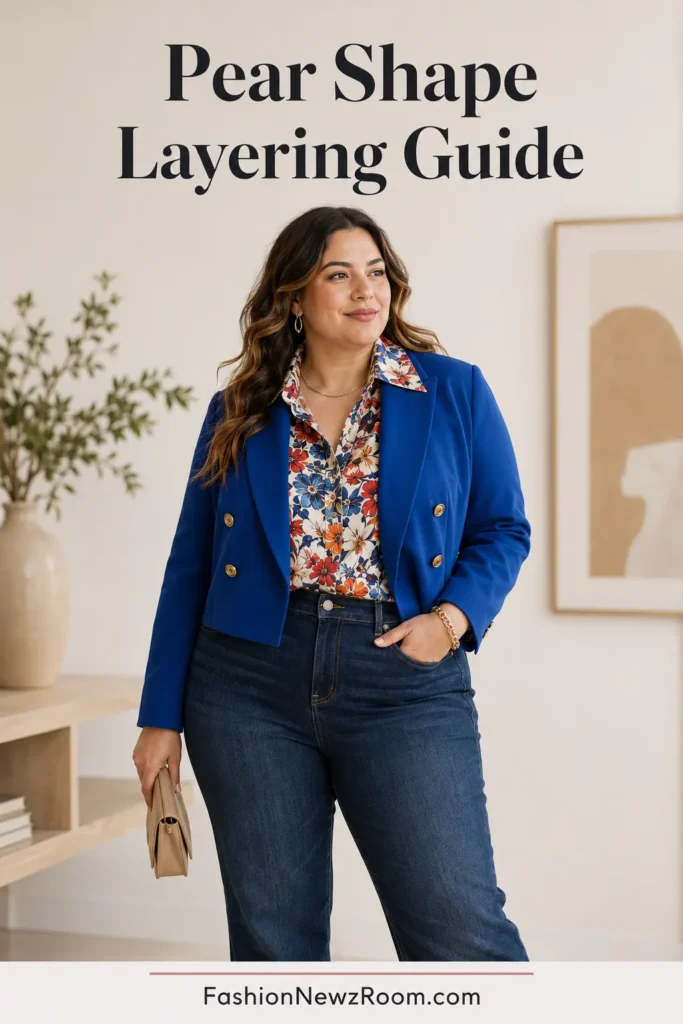
For pear-shaped bodies, the goal is simple: draw the eye up. You want shoulders, neckline, and chest to be the focal point — and keep things streamlined from the waist down.
Cropped jackets are your best friend. A cropped denim jacket, a tailored blazer that hits at the hip, or a boxy cardigan all add width and interest at the top without adding bulk over the hips. The key is that the jacket ends at or above the widest point of your hips.
Statement scarves and necklaces work in your favour. Layering a chunky scarf or a bold necklace over a simple top immediately pulls the eye upward. It’s a low-effort, high-impact trick.
Structured shoulders help a lot. Blazers or jackets with a bit of shoulder structure — not dramatic pads, just shape — balance out fuller hips naturally. Think classic tailoring over slouchy or droopy styles.
What to avoid: bulky layers on the lower half. Thick-knit skirts, heavily gathered trousers, or puffer vests that end at the hips will visually widen what’s already the wider part of your frame. Keep bottoms fitted or flared (A-line works beautifully) and save the interesting layers for the top half.
A good everyday look: a fitted turtleneck + cropped structured blazer + straight-leg trousers. The turtleneck adds vertical interest, the blazer frames the upper body, and the straight trousers elongate the legs without fighting for attention.
Best Layering Techniques for Apple Body Shape
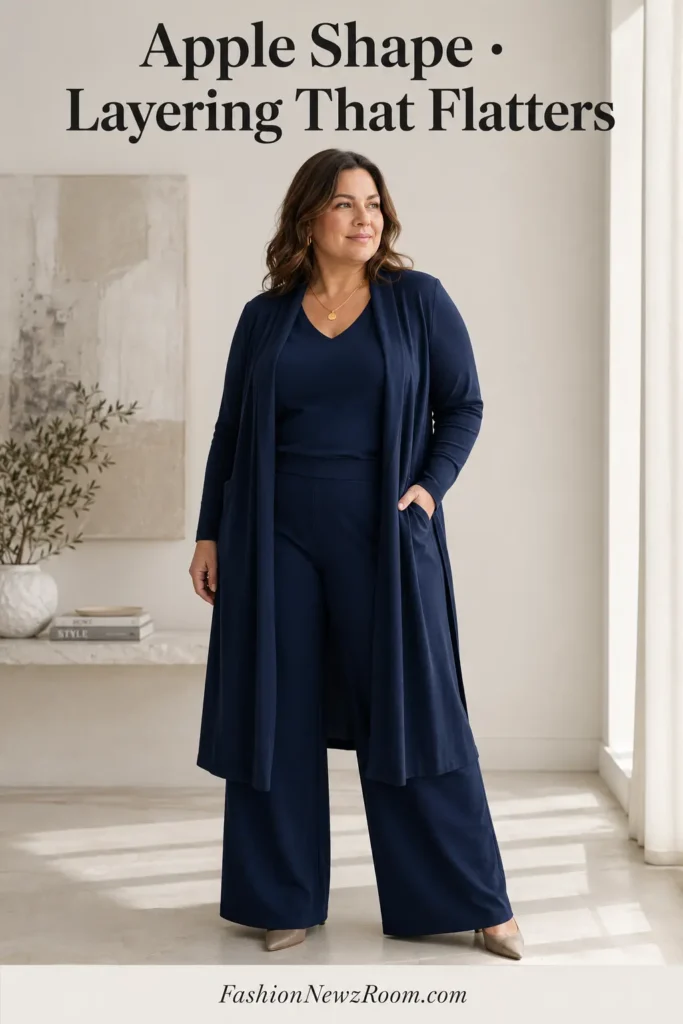
Apple-shaped bodies benefit most from layers that create length and draw the eye vertically rather than horizontally across the midsection.
Longline layers are essential. Open-front cardigans, longline blazers, and duster coats that fall below the hip all create a strong vertical line that elongates the torso. This is one of the most flattering techniques for this shape.
Open-front cardigans are particularly effective because they frame the body without wrapping around and emphasising the midsection. Worn over a fitted top in a similar or darker colour, they create a streamlined column of colour that’s incredibly slimming without trying too hard.
Monochrome layering is powerful here. Wearing layers in the same colour family — say, various shades of navy or camel — removes the visual breaks that can cut the torso short and make the midsection more prominent.
Lightweight fabrics are non-negotiable. Chunky knits and thick quilted vests can add bulk right where you don’t need it. Instead, reach for fine-knit layers, silk shirts worn open, or lightweight linen blazers that drape rather than cling.
Vertical interest always wins. V-necks, long pendants, vertical stripes, and open-collar layering all draw the eye up and down — creating length rather than width.
A great outfit formula: a V-neck fitted top + open-front longline cardigan in the same palette + wide-leg trousers. Effortless, proportionate, and genuinely chic.
Best Layering Techniques for Hourglass Body Shape
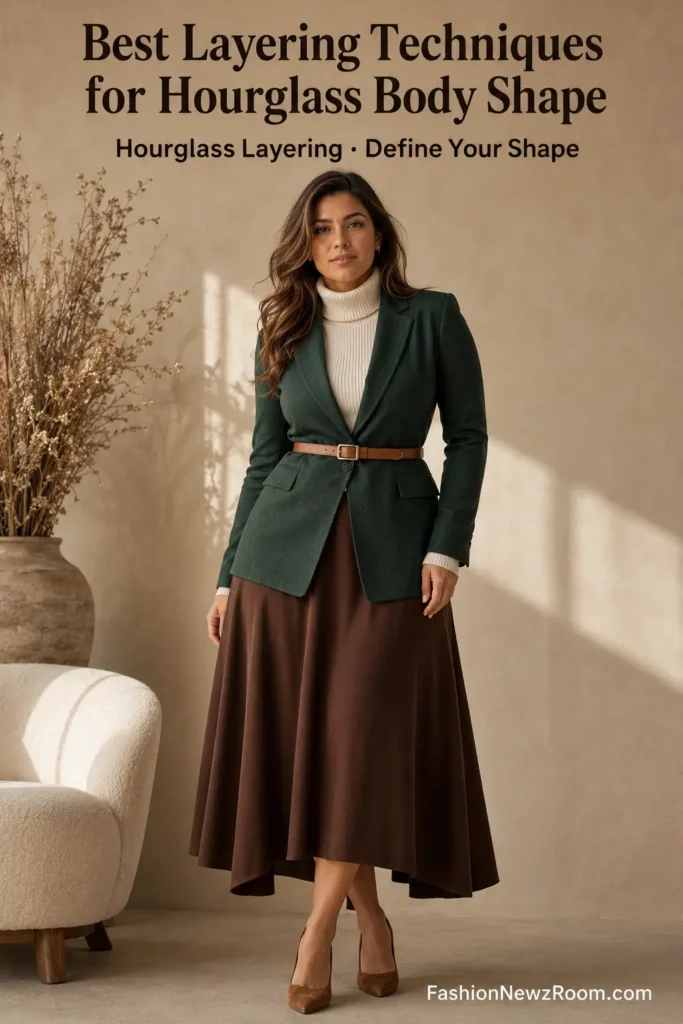
The hourglass silhouette is something many people work toward — so if you have it naturally, the goal is simple: let it show. That doesn’t mean everything has to be form-fitting. It means your layers should acknowledge your waist rather than erase it.
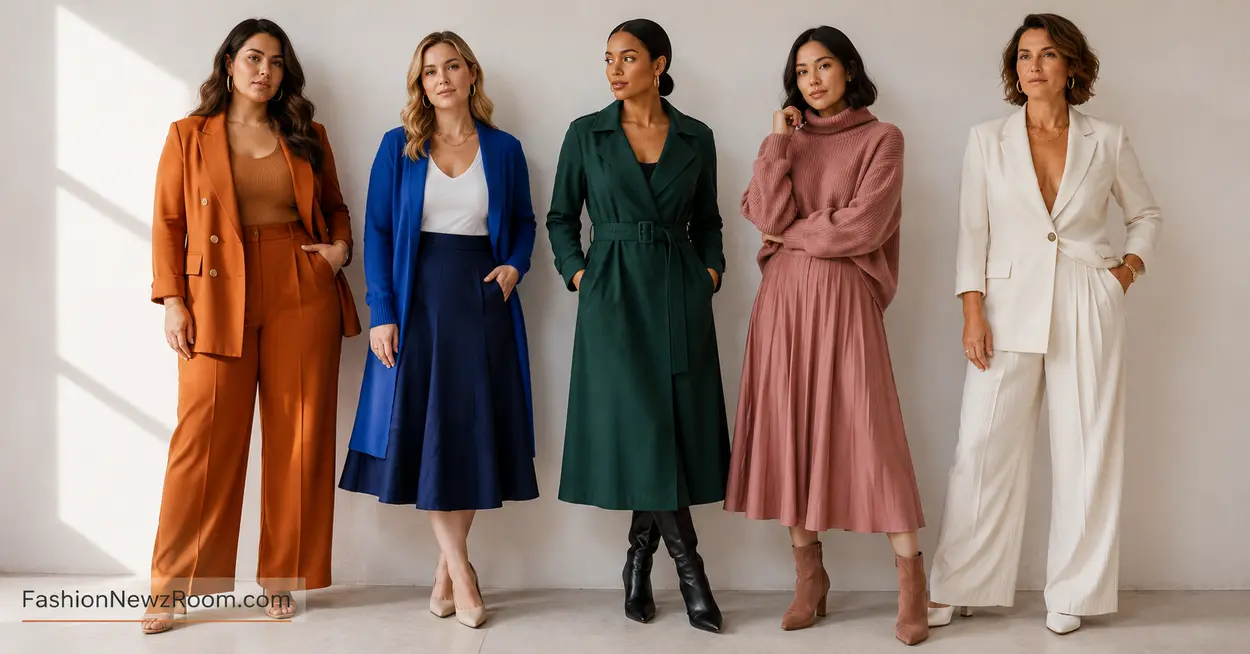
Tailored blazers are ideal. A well-fitted blazer — one that nips slightly at the waist rather than hanging straight — maintains your proportions beautifully. Oversized blazers can work, but only when belted or half-tucked so the waist doesn’t disappear entirely.
Belted coats and cardigans are a game-changer. Adding a belt over a longline layer instantly brings the waist back into the conversation. Even a trench coat becomes a waist-defining piece the moment you tie the belt.
Wrap-style layers are naturally flattering. Wrap cardigans, tie-front shirts, and wrap dresses all echo the hourglass shape — they emphasise the waist by design.
What to avoid: boxy, oversized silhouettes from head to toe. One relaxed layer is fine (in fact, it can look very cool), but stacking multiple boxy pieces will make you look shapeless rather than effortlessly casual. If you go oversized on top, stay fitted on the bottom, and vice versa.
A go-to look: fitted ribbed top + tailored mid-length blazer (slightly open) + high-waisted wide-leg trousers. The blazer keeps the structure, and the wide-leg trouser balances the top beautifully.
Best Layering Techniques for Rectangle Body Shape
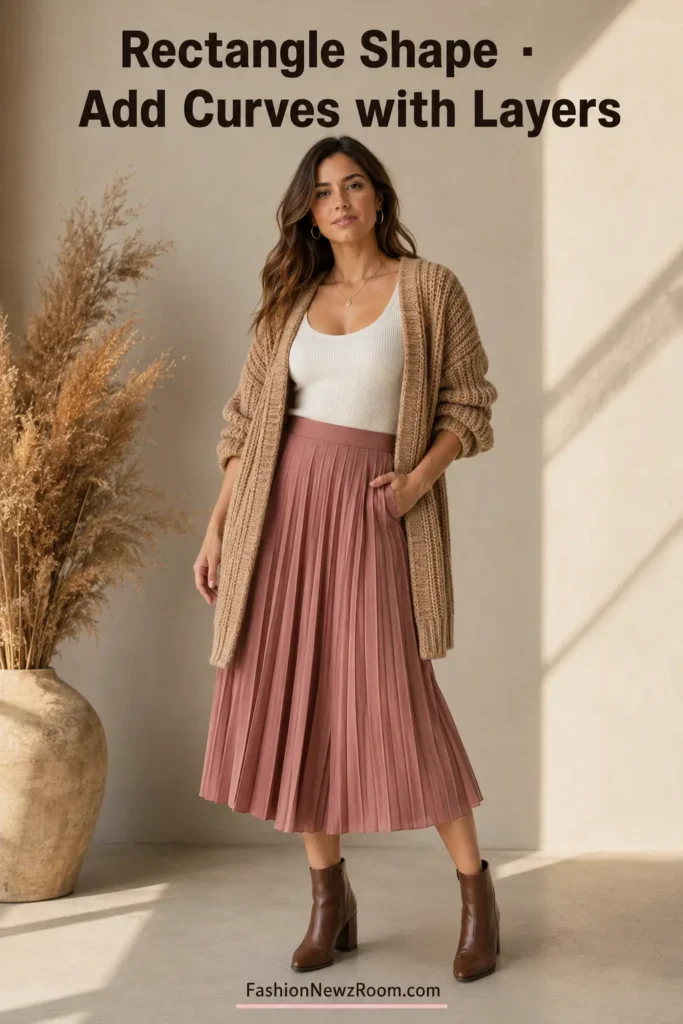
Rectangle body shapes have gorgeous, athletic proportions — the kind that look incredible in tailored and minimalist fashion. But when you want to create more visual curve and dimension, layering is your most effective tool.
Texture is everything. Mixing textures — a chunky knit over a silk slip, a shearling vest over a fitted turtleneck — creates visual depth that the eye reads as dimension. You’re not adding actual curves, but the contrast of textures tricks the eye in the best way.
Peplum jackets and tops are worth exploring. The flare at the hip creates the illusion of a waist, which is exactly what rectangle shapes are often looking to achieve. It’s a small but powerful silhouette trick.
Cropped outerwear works beautifully. A cropped jacket worn with high-waisted trousers creates a visual break at the waist — defining it even when it’s naturally less pronounced.
Chunky knits add volume and softness. A big, cosy knit sweater over a tighter base layer creates that contrast of volume that suggests shape. Layer it over a slip skirt for a feminine edge.
Play with proportions deliberately. Oversized top + fitted bottom, or fitted top + fuller skirt — these contrast-based silhouettes naturally create a more dynamic, curved-looking shape.
A fun layered look: ribbed bodysuit + chunky knit cropped cardigan + midi pleated skirt. The skirt adds movement and hip volume, the knit adds texture, and the bodysuit keeps the base clean.
Best Layering Techniques for Inverted Triangle Body Shape
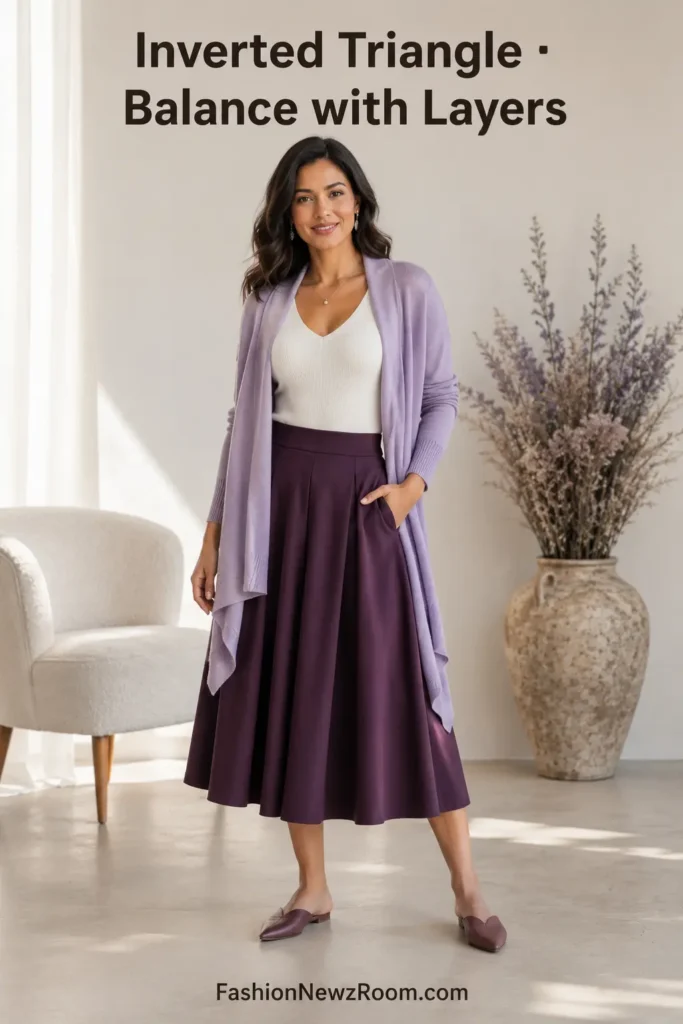
Inverted triangle bodies carry more width in the shoulder and upper body, tapering toward narrower hips. The goal with layering is to soften the top and add fullness and interest below — creating a more balanced silhouette overall.
Avoid heavy layering on the shoulders. Structured blazers with strong shoulder seams, thick scarves piled at the neck, or statement upper-body outerwear all add to an already-prominent shoulder line. Instead, reach for softer fabrics — draped cardigans, flowy open-fronts, and unstructured jackets.
Add volume below the waist. A-line skirts, flared trousers, and midi dresses with movement all balance out broader shoulders. When you layer an open cardigan over a dress or skirt with fullness, the lower body naturally becomes the visual anchor.
Longline cardigans in softer fabrics help elongate the body and pull the eye downward rather than across the shoulders.
Wrap-style lower layers work brilliantly. A wrap skirt or A-line midi adds fullness at the hip and thigh area — exactly where inverted triangle shapes benefit from more presence.
What to avoid: cold-shoulder tops, strong shoulder seams, and heavy upper-body layers without any lower-body counterbalance. These will all emphasise the width you’re trying to soften.
A brilliant everyday formula: V-neck fitted top (lower neckline softens the shoulder line) + longline open cardigan + wide-leg or flared trousers. Simple, balanced, and genuinely stylish.
Seasonal Layering Tips for Every Body Shape
Summer Layering
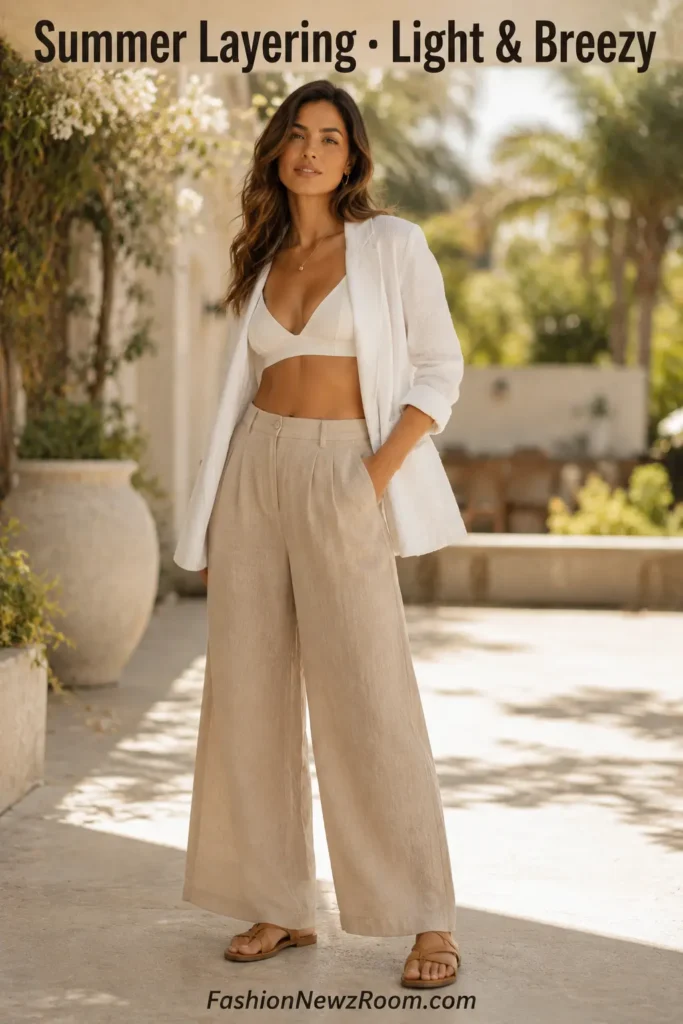
Summer layering is all about staying cool while adding that intentional, styled feeling. The key is lightweight fabrics that breathe.
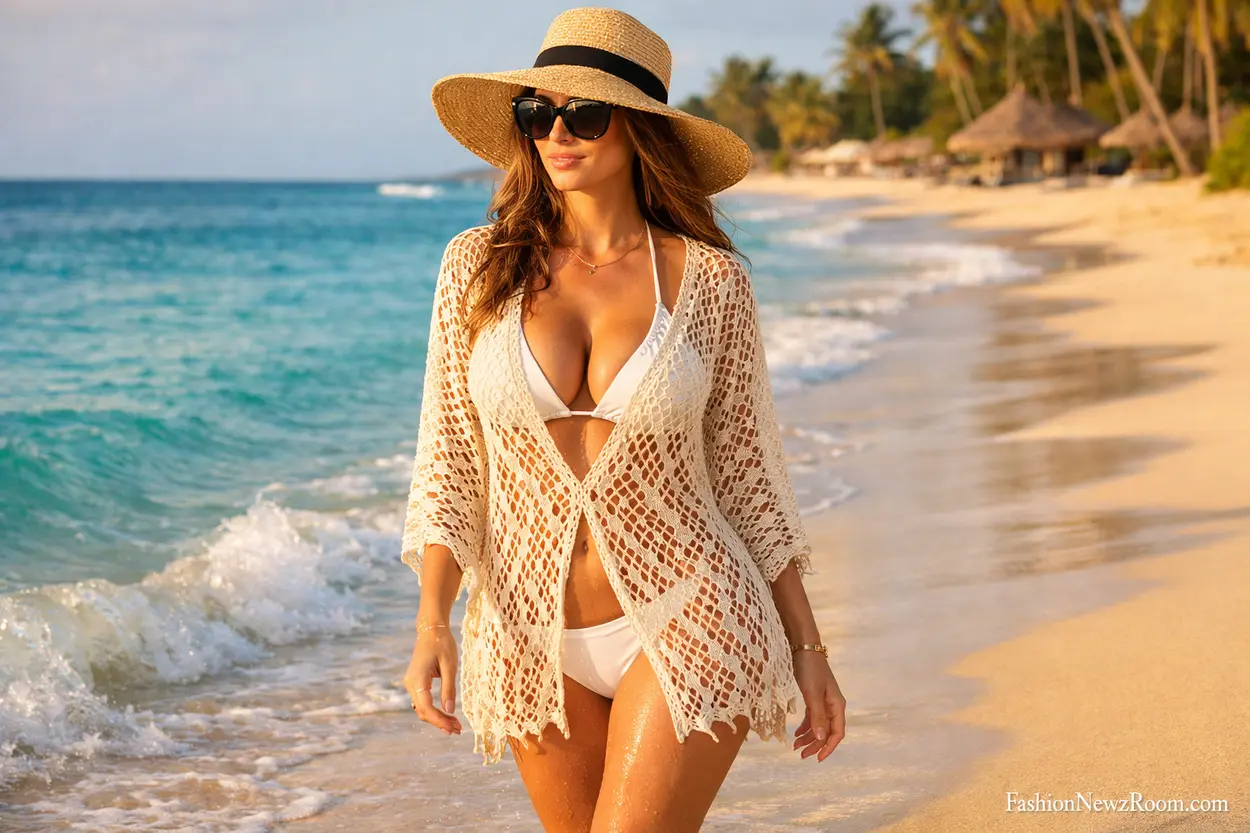
Think linen blazers thrown over slip dresses, cotton button-downs tied at the waist over bikini tops, or sheer blouses layered over bralettes. These combinations add visual interest without heat. Neutral-on-neutral or tonal colour combos work beautifully in the warmer months — white on white, sandy beiges, soft terracottas.
For body shape considerations: pear shapes can use a lightweight kimono to add upper-body interest, while apple shapes benefit from a breezy linen long-line layer that creates vertical flow without the bulk of heavier fabrics.
Fall Layering
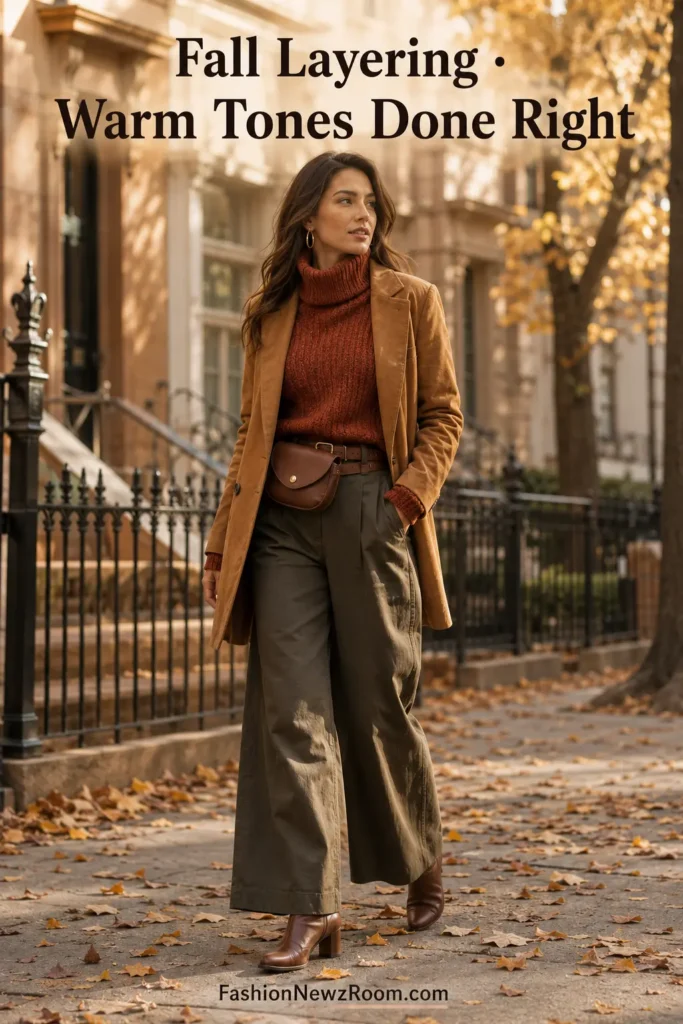
Autumn is arguably the best season for layering because the mild temperatures allow for actual visible layers — not just functional ones.
Turtlenecks under slip dresses are a timeless autumn combination. Denim jackets over lightweight knits, flannel shirts tied around the waist, and longline blazers over chunky knit turtlenecks are all fall classics. Colour-wise, autumn layering naturally lends itself to warm earth tones: mustard, rust, olive, burgundy, and camel working together seamlessly.
Winter Layering
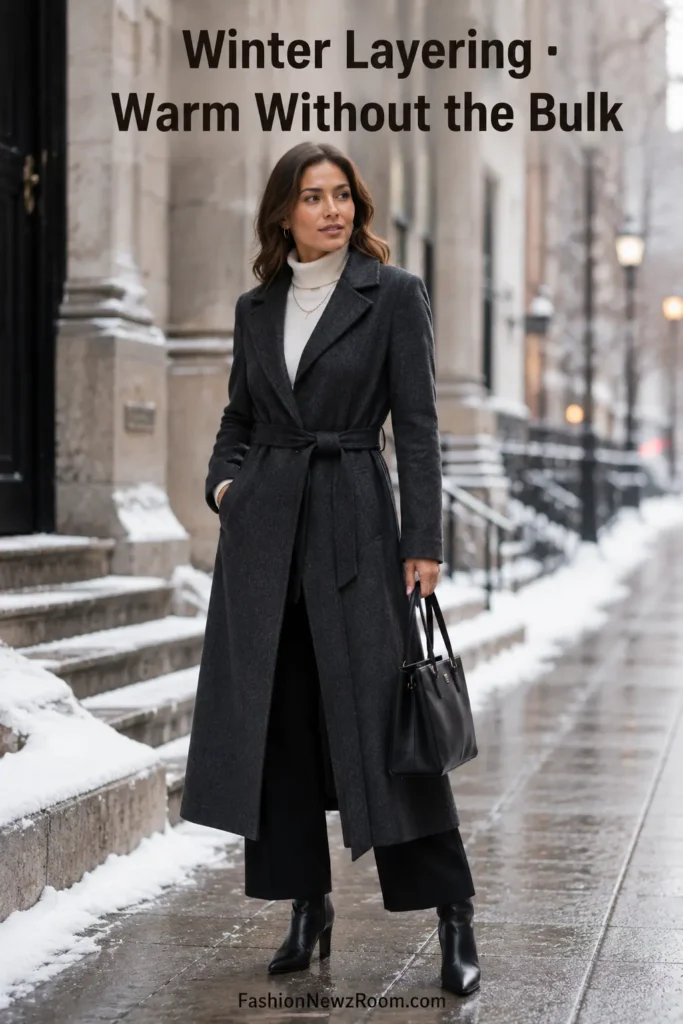
Winter layering requires more thought because the pieces are heavier and bulkier. The goal is warmth without looking like a walking sleeping bag.
Slim-fitting turtlenecks or thermal base layers underneath structured coats keep the silhouette intact. Oversized scarves should be wrapped or tucked rather than just draped if you want to avoid adding volume at the neck and shoulder area. For apple and rectangle shapes especially, longline wool coats with a belt are incredibly effective in winter.
Spring Layering
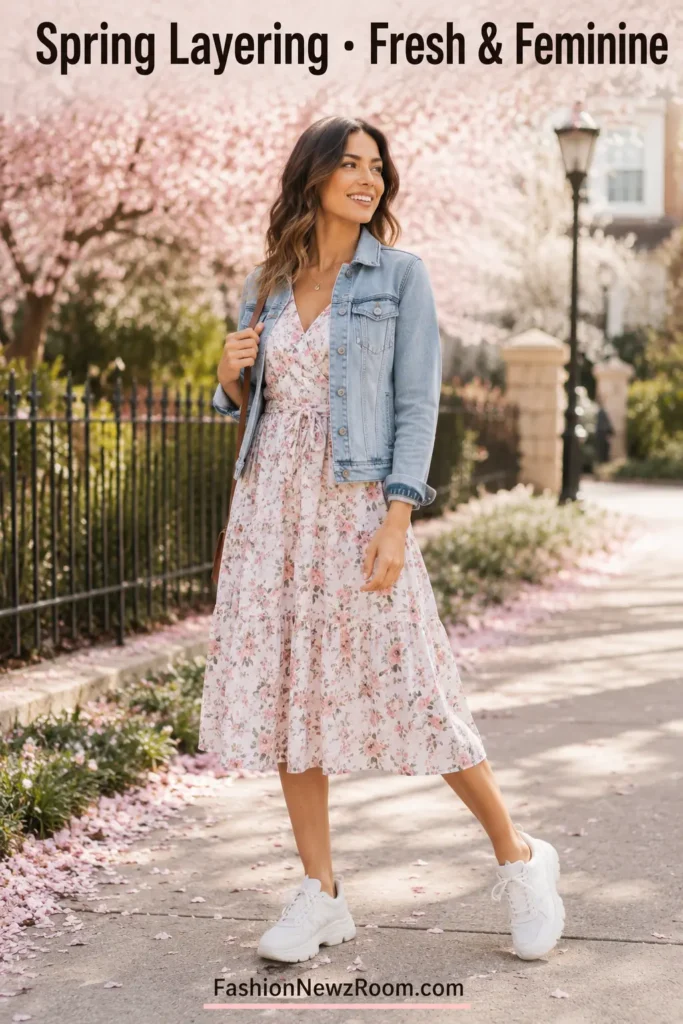
Spring layering mirrors summer in spirit but with slightly more structure — cardigans rather than kimonos, light trench coats rather than parkas.
Classic spring combinations include a trench coat over a floral midi dress, a denim jacket over a striped tee and tailored trousers, or a lightweight blazer over a white shirt with wide-leg linen pants. Pastels, soft florals, and fresh neutrals dominate. The pieces are lighter, but the layering logic stays the same.
Common Layering Mistakes to Avoid
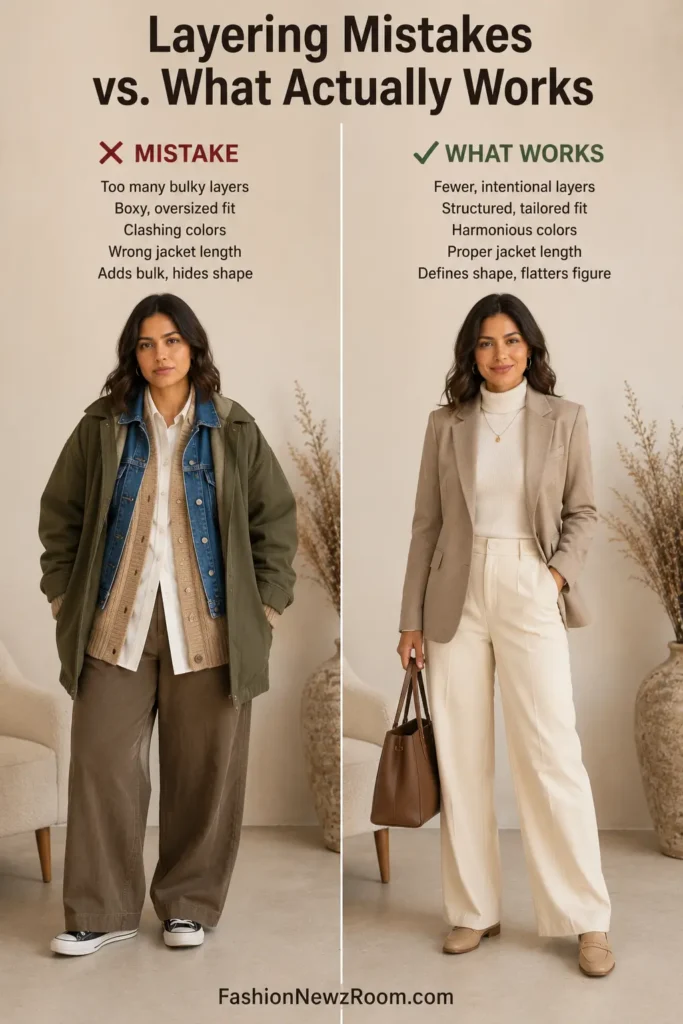
Even with the best intentions, layering can go sideways. Here are the most common mistakes — and how to fix them.
Too many oversized pieces at once. One roomy, relaxed layer can look intentional and cool. Three oversized pieces on top of each other just looks overwhelming and shapeless. Stick to one statement volume piece per outfit and let the rest be more fitted.
Thick fabrics creating unnecessary bulk. A chunky knit over a quilted vest over a heavy coat? That’s warmth, sure — but it’s also a lot. When temperatures demand heavy layers, choose one hero piece (the coat) and keep the layers underneath sleek and thin.
Ignoring body proportions. This is the big one. Wearing a longline jacket that hits at the widest point of your hip (not good for pear shapes), or wearing all your layers at chest level (not helpful for inverted triangles), misses the whole point of body-aware layering. Always think about where your layers land and what they’re doing to your silhouette.
Poor colour coordination. Random colour combinations can make layers look chaotic rather than curated. A good rule of thumb: keep the palette to 2-3 colours maximum, and let one neutral anchor the rest.
Wrong jacket lengths. Jacket length has a huge impact on proportions. A jacket that ends at the hip makes legs look shorter. A cropped jacket above the hip elongates. A longline jacket adds height. Know your length and choose with intention.
Accessories That Improve Layered Outfits
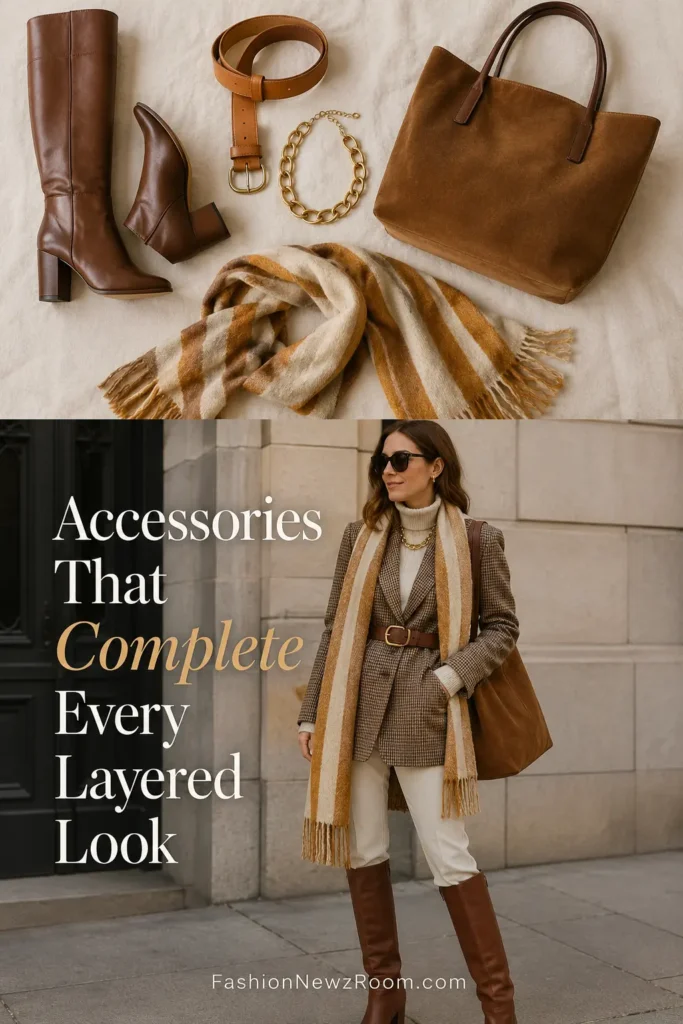
The right accessories don’t just finish a layered look — they actually improve the proportion and balance of the entire outfit.
Belts are perhaps the most powerful layering accessory. A thin belt over a longline cardigan or a chunky belt over a trench coat can define a waist that layers might have softened. For apple and rectangle shapes especially, a well-placed belt is transformational.
Scarves add colour, texture, and upper-body interest. For pear shapes, a large statement scarf draws attention to the upper body. For inverted triangles, keep scarves lighter and more loosely draped to avoid adding shoulder volume.
Boots — especially knee-high or over-the-knee styles — elongate the leg and work beautifully with layered midi or maxi skirts. They give the lower half a clean, finished line even when the upper body has a lot going on.
Bags can work with or against your proportions. Crossbody bags sit at the hip — which adds width there (great for inverted triangles, less ideal for pear shapes). Shoulder bags or top-handle bags keep the focus higher.
Jewellery in layered outfits should be used strategically. Long pendant necklaces create vertical lines (great for apple shapes). Stacked bracelets and earrings add interest at the extremities without affecting the overall silhouette.
Hats — beanies, berets, wide-brimmed hats — complete a layered look and add personality. For inverted triangle shapes, a wide-brimmed hat can actually soften the shoulder area beautifully by drawing the eye upward.
Layering Trends in Modern Fashion (2026)
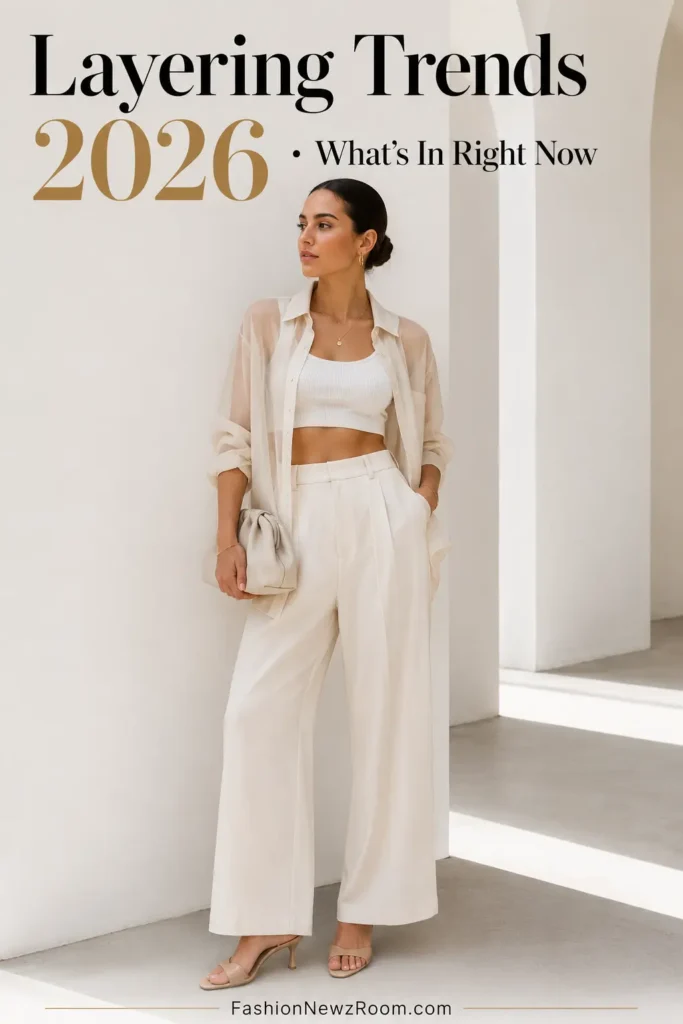
Fashion in 2026 is all about considered layering. The maximalist approach of previous years has given way to something more refined — layering that feels intentional, wearable, and genuinely personal.
Minimal layering aesthetics are having a major moment. Think one considered layer over a clean base — a crisp overshirt on a fitted tee, a structured blazer over a tank. The layers are there, but nothing fights for attention.
Street-style layering continues to evolve with a focus on mixing proportions — an oversized hoodie under a structured coat, or a blazer over a graphic tee with cargo trousers. It’s deliberately mismatched in a way that somehow feels perfectly put together.
Modest layering is growing in both visibility and influence. Long-sleeved underpinnings worn beneath sheer or sleeveless pieces, maxi skirts layered under shorter dresses — modest fashion has introduced a whole new vocabulary of layering that’s stylish, thoughtful, and globally relevant.
Office layering has become much more creative post-pandemic. Gone are the days of just blazer + trousers. Modern office layering might involve a fine-knit turtleneck under a slip dress, or a longline blazer worn as a coat over tailored separates.
Capsule wardrobe layering is perhaps the most practical trend — the idea that 10-15 versatile pieces, layered intelligently, can create hundreds of outfits. It’s sustainability-minded and genuinely clever.
Celebrity & Influencer Layering Inspiration
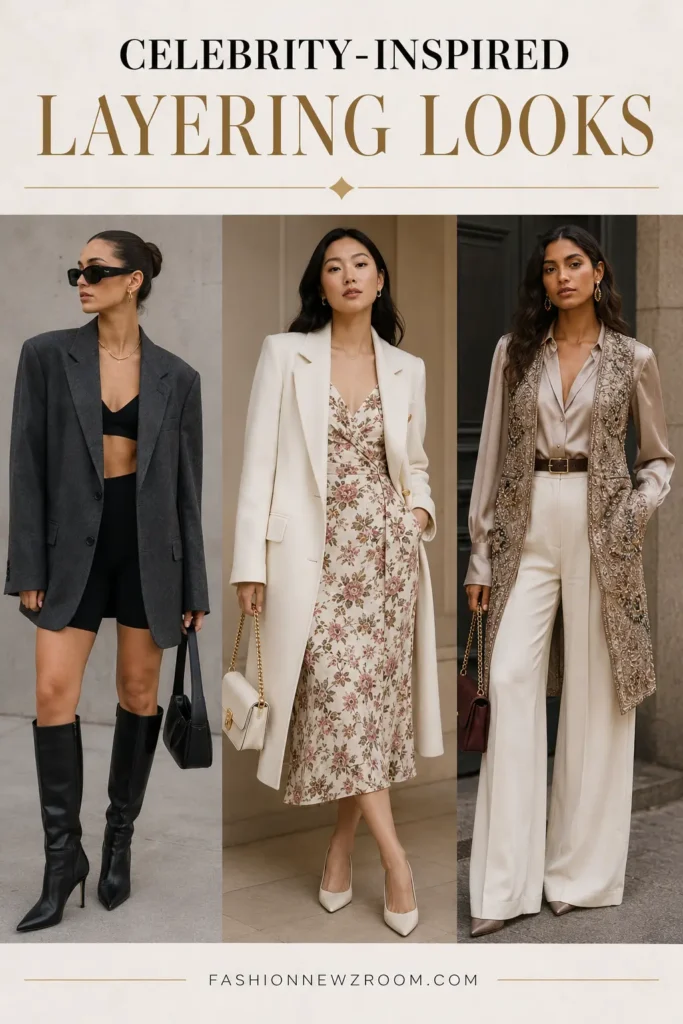
Looking at how fashion-forward celebrities and influencers approach layering can offer some genuinely useful real-world inspiration.
Zendaya consistently uses layering in a way that feels both high-fashion and utterly wearable. Her approach often involves a strong base silhouette — a tailored trouser or fitted skirt — topped with unexpected layers like a sheer shirt over a structured top, or a leather jacket over an elegant gown. The contrast is always intentional.
Hailey Bieber has built an entire aesthetic around relaxed, effortless layering. She’s known for pairing oversized blazers with simple bralettes, cycling shorts, and knee-high boots — a combination that somehow manages to look both comfortable and incredibly chic. Her colour palette stays tight (neutrals, whites, browns), which is what holds her layered looks together.
Deepika Padukone brings a different dimension entirely — blending Western layering techniques with South Asian fashion sensibilities. Her red carpet and street style both show how structured layers (a tailored coat, a blazer, an embellished vest) can work across different cultural fashion contexts while still honouring body proportions and elegance.
The throughline across all three? None of them are wearing their layers randomly. Each piece serves the silhouette.
Final Thoughts
Here’s what layering ultimately comes down to: it’s not about hiding your body. It’s about styling it. There’s a real difference between the two.
When you understand your body shape and how different layers interact with your proportions, you stop thinking of layering as a challenge and start seeing it as one of the most useful tools in your wardrobe. It can add structure where there isn’t any. It can soften where you want softness. It can shift focus, create balance, and make a simple outfit look like it took genuine thought — even when it took five minutes.
The best advice? Experiment without pressure. Try the cropped jacket. Belt the cardigan. Layer the slip dress over the turtleneck. Some combinations will work immediately. Others will teach you something. Either way, your style vocabulary grows.
Fashion is personal, and your layering style will be too. That’s not a problem to solve — it’s the whole point.
FAQs
1. What is the best layering technique for curvy body shapes?
For curvy bodies (typically apple or hourglass shapes), the most effective layering techniques involve creating or maintaining vertical lines and waist definition. Open-front longline cardigans, belted coats, and wrap-style layers all work beautifully. The goal is to enhance natural proportions rather than add bulk.
2. How can I layer clothes without looking bulky?
Stick to lightweight base layers, choose thinner fabrics for inner layers, and reserve thicker textures for just one piece per outfit. Also, be strategic with colour — monochrome or tonal layering (similar shades from top to bottom) reads as slimmer than heavy colour blocking.
3. Which jackets work best for pear-shaped bodies?
Cropped jackets — those that end at or just above the widest part of the hip — are the most flattering for pear-shaped bodies. Structured blazers with some shoulder detail, denim jackets, and boxy cropped cardigans all work well. Avoid hip-length or longline jackets that end exactly at the widest part of the hips.
4. Can layering make you look slimmer?
Yes — when done correctly. Vertical lines, monochrome palettes, and longline layers all create the visual illusion of a longer, leaner silhouette. The key is avoiding horizontal breaks (belts in contrasting colours, jackets that cut across the widest point) that make the eye stop rather than flow.
5. What fabrics are best for layering outfits?
Lightweight and non-bulking fabrics are ideal for inner layers: fine knits, cotton jersey, silk, rayon, and lightweight linen. For outer layers, structured fabrics like wool, denim, and tweed hold their shape. Avoid pairing multiple thick fabrics (heavy knit + thick fleece + puffer jacket — that’s too much weight).
6. How do I layer clothes during summer?
Summer layering is all about breathable fabrics. Linen blazers, sheer blouses, lightweight kimonos, and untucked cotton button-downs are all excellent options. Tonal dressing (all-white or all-sand, for example) keeps summer layers feeling cool visually and physically. Avoid synthetic fabrics that don’t breathe.
7. Are oversized layers flattering for all body types?
One oversized piece can work for every body type — the trick is balance. Pair an oversized top with fitted bottoms, or a flowing wide-leg trouser with a more fitted layer on top. Where it goes wrong is stacking multiple oversized pieces, which removes all silhouette definition regardless of body shape.
Further Reading & Style Resources
For deeper dives into fashion styling and body-positive dressing, these resources are consistently excellent:
- Vogue – Fashion Styling Guides
- Harper’s Bazaar – What to Wear
- Who What Wear – Outfit Ideas & Trends
- InStyle – Body Shape Fashion Tips